

Looking for a smarter, more flexible seating solution? The modular sectional sofa is today’s answer for small spaces, open floor plans, and ever-changing living needs. But with thousands of choices, hidden pitfalls, and frequent disappointment, what really makes a modular sectional work—and last—for you?
Key Takeaways
- Modular sectional sofas are trending due to their space-saving, reconfigurable design—perfect for compact homes and flexible lifestyles.
- Common pain points include tricky assembly, limited flexibility, and cleaning frustrations—know what to look for before you buy.
- The best value comes from true modularity, easy-clean fabrics, robust connectors, and clear, honest specs—not brand hype.
- 1. What Is a Modular Sectional Sofa, and Why Choose One?
- 2. How to Find the Right Modular Sectional Sofa (Step-by-Step Guide)
- 3. Advanced Analysis & Common Pitfalls of Modular Sectionals
- 4. Conclusion
- 5. FAQ
1. What Is a Modular Sectional Sofa, and Why Choose One?
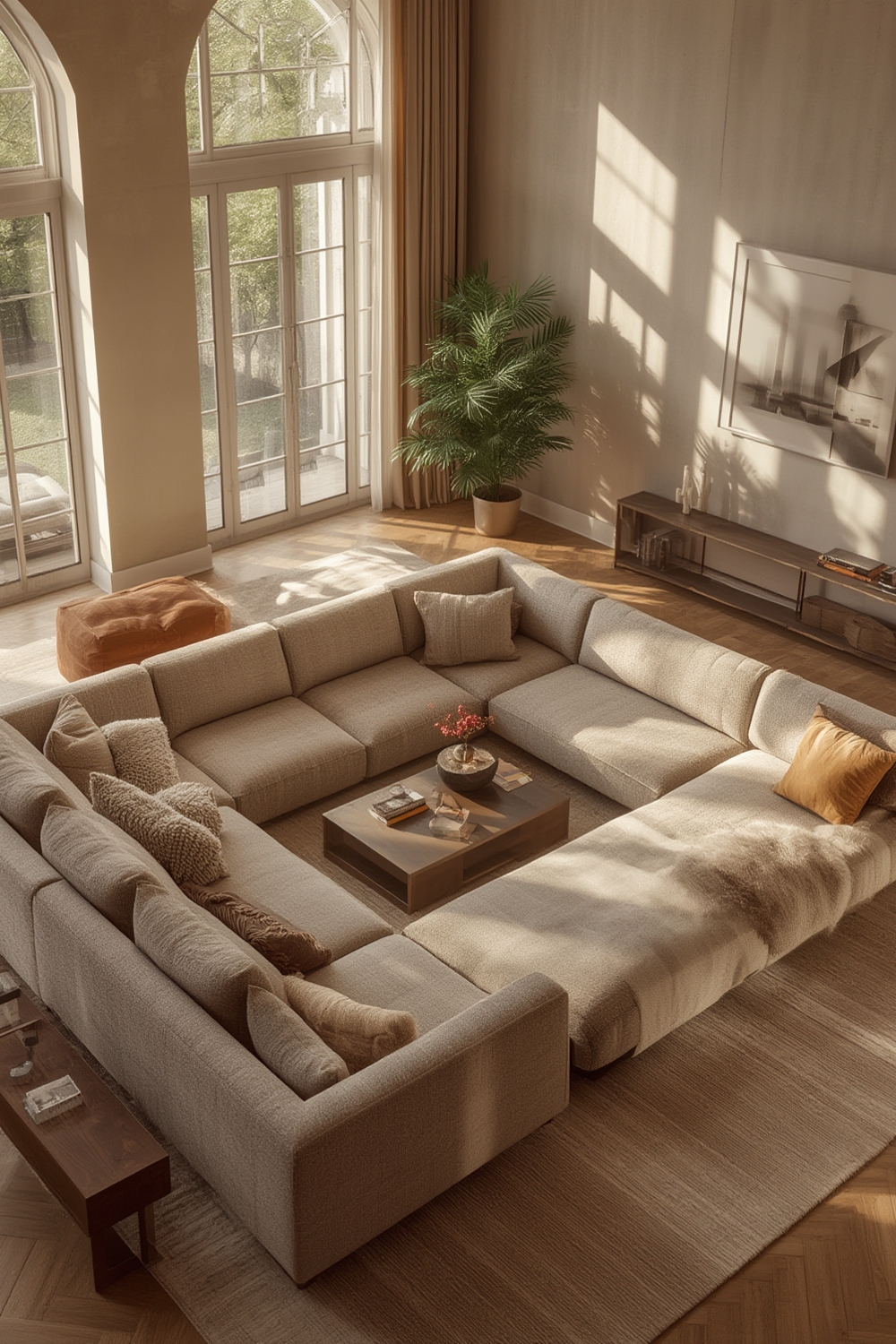
A modular sectional sofa is a seating system made of separate units or “modules” you can connect, rearrange, or expand to fit almost any room or lifestyle change. Unlike fixed L-shaped or U-shaped sectionals, true modulars let you select only the pieces you need—sofas, chairs, chaises, ottomans, storage cubes—and reconfigure them when you move or want a new look.
Why is this concept exploding? Home sizes are shrinking (especially for urban renters and first-time buyers), and more people want furniture that adapts as families grow, roommates change, or work-from-home blurs life’s boundaries. Industry research shows the modular sectional sofa market is booming, reaching over USD 39.2 billion in 2024 and grabbing particular attention among city dwellers and move-happy millennials who crave flexibility, storage, and easy cleaning. Features like storage ottomans, fully removable covers, and performance fabrics are now must-haves for many shoppers.
2. How to Find the Right Modular Sectional Sofa (Step-by-Step Guide)
Choosing a modular sectional isn’t just about picking the right color. Here’s a direct, step-by-step guide for getting it right and avoiding buyer’s remorse down the road.
- Measure Your Space Accurately. Don’t eyeball it. Use a tape measure to map your room’s max sofa length, depth, and height that still allows for walking clearance. For small or irregular rooms, leave at least 30-36 inches for walkways and don’t block doors or windows.
- Decide on “True Modularity” vs. Partial Flexibility. Ask if modules are all the same or if some must be corners or seats. True modulars let you rearrange in any direction—including separating into standalone seats. Some systems only allow basic flip options (chaise left/right).
- Home in on Key Features:
- Removable, washable covers? Check if arms and bases are covered, not just seat/back cushions.
- Storage? Storage ottoman or under-chaise storage is a game-changer in tight spaces.
- Pet and family durability? Look for stain-resistant, performance, or OEKO-TEX certified fabrics.
- Read Owner Reviews for Critical Details. Don’t just check star ratings—scan for mentions of “assembly trouble,” “gaps between modules,” “sliding on floors,” or “cover hard to remove.”
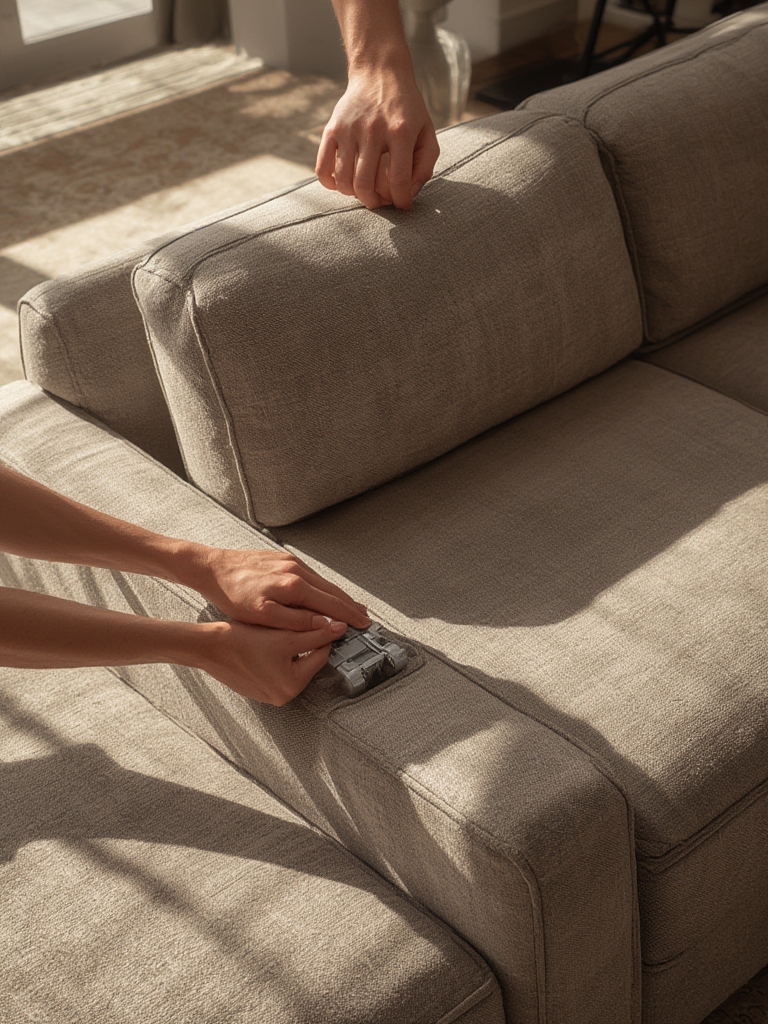
- Request Module Specs Up Front. Get detailed measurements, module weights, foam density (>1.8 lb/ft³ is safest), and weight ratings in writing. Insist on seeing connector types in photos or diagrams before you buy.
- Set a Realistic Budget. For small spaces, entry-level models (USD 700–1,200) are available but may trade durability or comfort. Most long-lasting flexible sets run in the USD 1,200–2,500 range, with some premium systems above that. Always cross-check what warranty the brand offers on frames, connectors, and cushions.
- Think Ahead: Expandable & Compatible? Ask if you can buy matching modules years later. Some brands stop making fabrics or change connectors—clarify before committing.
Bonus: If space is extremely tight, consider pairing a compact modular sectional with a lift top coffee table or Murphy bed cabinet to maximize every square foot.
3. Advanced Analysis & Common Pitfalls of Modular Sectionals
Real-world reviews highlight that modular sectionals can be a revelation—or a regret. Below are the top problems buyers face, and how to spot them before you get burned.
Assembly & Setup Challenges
- Frustrating assembly is a leading negative—many buyers report poor labeling, hard-to-use connectors, and multi-hour builds for even small sets.
- Alignment issues (modules don’t line up, gaps appear) are common when connector quality is low or instructions are unclear.
- For older or physically limited users, weight and connector stiffness matter even more: plastic clips often bend or don’t seat properly.
Durability & Build Quality
- Cushion sagging within 6–24 months is rampant in entry-level sets with low-density (<1.8 lb/ft³) foam or thin plywood frames.
- Frames may loosen or creak after repeated moves or reconfiguration, especially for stapled/cheap wood internals.
- Washable covers sometimes use basic zippers or threads that fail with frequent washing; watch for “pilling” and “fading” complaints.
Modularity in Reality
- Some “modular” sofas limit you to only left/right-switchable chaise or fixed arms, which undermines the flexibility you’re paying for.
- Modules should be able to function alone (standalone seat or ottoman) without exposing raw, unfinished sides.
- Poor connector choices lead to sliding or instability, especially on wood or tile floors.
Cleaning & Washability Trouble
- Many sets advertise washable covers, but only seat/back cushions come off; arms and base may be fixed—clarify before purchasing.
- Tight covers and poor zipper quality make washing time-consuming and risk tearing or color loss.
Hidden Storage Weaknesses
- Ottoman or under-chaise storage can be surprisingly shallow or prone to loose hinges.
- Older users note that some gas-lift or panel lifts are heavy and hard to operate.
| Feature | Entry-Level | Mid-Range | Premium |
|---|---|---|---|
| Typical Price (3–5 seats) | $700–1,200 | $1,200–2,500 | $2,500–5,000+ |
| Frame Material | Plywood/particleboard | Engineered/kiln-dried hardwood | Solid hardwood, metal brackets |
| Module Modularity | Chaise swap, few options | Multiple layouts, some symmetry | Full symmetry, all sides finished |
| Connector Type | Plastic/cheap metal | Steel clips/pins | Tool-less, robust steel/rail |
| Cover Washability | Usually seat/back only | Seat/back, sometimes arms | All covers removable (seat, back, arms, base) |
| Storage Included | Small ottoman, basic | Larger ottoman, some chaise storage | Multiple modules w/ deep storage |
| Typical Durability (heavy use) | 2–3 years | 5+ years | 5–10+ years |
Don’t fall for “modular” marketing alone—ask questions and insist on photos, videos, or clear diagrams before buying. For space-limited or multi-use rooms, read up on rules of thumb for planning layouts that really work. Our furniture painting and refinishing guide offers more tips for keeping living spaces feeling fresh without total replacement.
You’ll also find valuable advice about furniture and room care in our furniture cleaning methods guide and see how multifunctional home upgrades—like covered outdoor living spaces—are transforming modern living.

4. Conclusion
The modern modular sectional sofa brings flexible living into reach—but only if you select with eyes wide open. Prioritize symmetric modules, robust connectors, fully washable covers, and honest specifications. Don’t underestimate the challenge of assembling, cleaning, or even expanding your system down the road. With smart planning and a critical approach, a modular sectional sofa can transform small rooms and adapt to all of life’s twists—without regret.
Ready to rethink your space? Start comparing options, ask for detailed module specs, and get inspired by innovative solutions like biophilic design for a truly personalized, flexible home.
5. FAQ
Can I really rearrange a modular sectional sofa in any shape I want?
Only systems with fully symmetric modules and connectors on multiple sides allow almost any configuration—including L-shapes, U-shapes, and separate chairs. Many lower-priced or entry-level models only permit limited variations, like a chaise switching sides. Always verify before you buy.
Will I be able to buy more modules in matching colors years from now?
Some brands keep fabrics and connectors consistent for several years, but many change styles or suppliers. Ask about long-term compatibility and color lot policies up front, especially if you expect to move and expand your sofa in the future.
How deep should a modular sectional be for a small living room?
Ideally, the depth should not exceed 36–38 inches including back cushions, leaving at least 30–36 inches of clear walkway space between the sofa and other furniture. Mark out the footprint with tape and test with temporary boxes to make sure it fits your circulation needs.
Are all modular sofa covers fully washable?
No. Many “washable” systems only let you remove seat and back cushion covers. Arms and bases may be fixed; full washability is usually found in mid-range and premium lines. Always ask for specifics, and check care instructions for shrink/warp warnings.
What’s the best modular sectional for households with pets?
Choose sofas with tightly woven, stain-resistant performance fabrics (like microfiber, polyester blends, or OEKO-TEX certified covers). Make sure all covers are easily removable for washing. Some brands even advertise pet-claw resistance—check for real owner reviews mentioning pet performance.
