

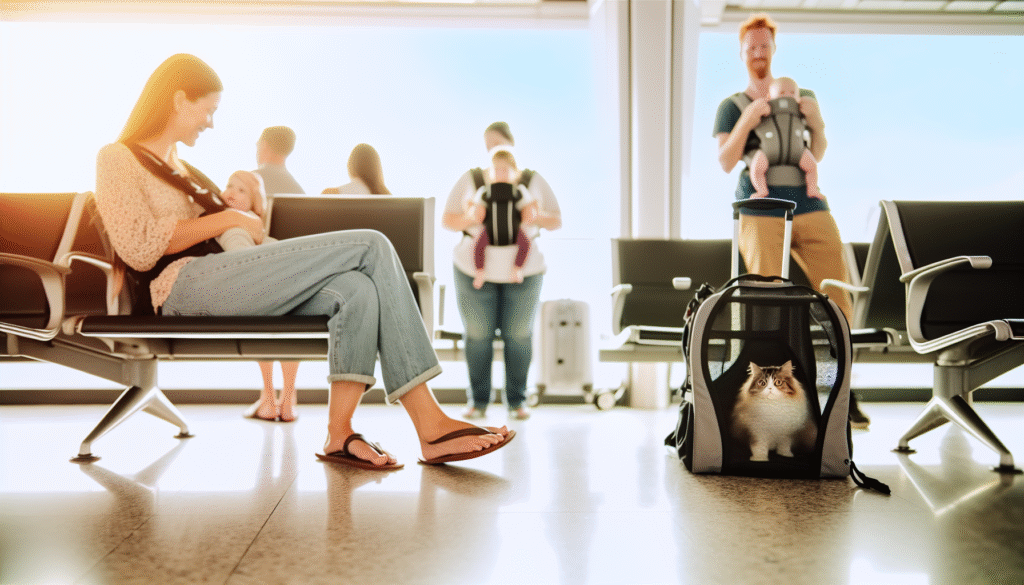
“Finding the right carriers is essential whether you’re transporting a cat, flying with a small pet in-cabin, or carrying your baby daily. This guide explores various carriers, including cat carriers, airline-approved in-cabin pet carriers, and top baby carriers. Learn about sizing, safety rules, airline requirements, ergonomic criteria, and practical tips to choose a secure, comfortable carrier for your needs.”
Why Choosing the Right Carriers Matters for Cats and Babies
- Safety — Choosing the right carrier is critical to protect both cats and babies during travel or outings. Proper containment minimizes the risk of injury from sudden stops, drops, or unexpected movements, such as a car braking sharply or turbulence on an airplane. For cats, a well-secured carrier prevents escape and blocks access to moving parts or interfering with drivers. For babies, a secure, ergonomic carrier creates a safe cocoon that supports them and shields them from external risks in crowded, unpredictable environments.
- Comfort and stress reduction — The sizing, construction and ventilation of a carrier are not just details; they directly influence how well a pet or baby tolerates transport. Cats tend to experience heightened stress when exposed to strange stimuli, making a cozy, well-ventilated carrier crucial to limiting their anxiety. Baby carriers that distribute weight safely and maintain proper posture reduce fussiness and support restful sleep. Supportive interiors, soft materials, and proper space all enhance comfort during long or unfamiliar journeys.
- Regulatory and practical constraints — Carrier selection is shaped not just by comfort and safety, but also by strict airline and travel regulations. In-cabin pet carriers must fit under the seat, feature waterproof bases, and ensure sufficient ventilation. For cargo transport, airlines require reinforced crates with metal doors, strong fasteners, and visible “live animal” labeling. Failure to meet these standards risks denied boarding or unsafe journeys—making compliance a non-negotiable priority.
- Ergonomics and long-term use — Carriers are not just temporary solutions; they must protect musculoskeletal health during repeated use. Baby carriers should cradle the infant’s hips and spine, preventing strain and promoting healthy development. Cat carriers need to allow natural postures, so the animal can relax, turn, and lie down, instead of being cramped or crouched for hours.
- How this guide is structured —This guide leads you step-by-step: first, how to select a cat carrier (from practical sizing to behavioral strategies), then how to interpret and meet airline in-cabin rules, followed by guidance on the most ergonomic baby carrier designs. A final checklist makes sure you’re ready to purchase the right model and maintain it for safe, lasting use.
Before diving in, take a moment to accurately measure your cat and your infant—it’s the first step towards stress-free, safe travel for everyone. The next chapter covers making the best carrier choice for your cat.
Selecting the best carrier for your cat
- Carrier types
- Hard-sided/crate carriers: Pros: Maximum durability, escape resistance, easier cleaning, good protection from impacts. Cons: Heavier, less flexible for stowage under seats, bulkier to carry, sometimes less ventilation than mesh. Great for nervous or destructive cats.
- Soft-sided carriers (including purse-style): Pros: Lightweight, easier to fit under airline seats, collapsible for storage, often with multiple mesh panels. Cons: Can be harder to deep-clean, may lose shape with heavy pets, and zippers can be breached by anxious cats.
- Backpack carriers: Pros: Hands-free transport, often include ventilation windows, good for short trips or crowded airports. Cons: Limited size (not ideal for larger cats), may be difficult to keep level, most are too large for under-seat storage on planes.
- Car-seat carriers: Pros: Secure attachment to vehicle seatbelts, many double as travel beds. Cons: Usually not airline-approved, heavier to carry, less portable outside vehicles.
- Pet strollers: Pros: Convenient for long airport walks or large cats, usually spacious. Cons: Not cabin-compliant, less practical for in-cabin use, and bulky to travel with.
- Size and fit
- Step 1: Measure your cat’s length (nose to base of tail), height (floor to top of ears when standing), and width (shoulder breadth).
- Step 2: Choose a carrier that allows your cat to stand, turn, and lie down comfortably. Aim for at least 1.5x your cat’s length in the carrier’s internal dimensions.
- Step 3: Always compare both carrier specs and airline under-seat dimensions before buying, as external carrier measurements include handles and zippers.
- Ventilation and materials
- Ensure mesh or breathable panels on a minimum of three sides for cabin use.
- Favor carriers with removable, waterproof or leak-proof bottoms—required by most airlines.
- Choose interiors that are wipe-clean or machine-washable for hygiene.
- Behavioral considerations and acclimation
- Place the open carrier in your cat’s area well before travel; let them explore at their own pace.
- Reward your cat with treats and toys when they enter voluntarily. Leave comfort objects and soft bedding inside.
- Spray bedding with feline pheromones a day before travel to reduce anxiety.
- Practice with short car rides with your cat safely contained; extend the timing to build confidence.
- Safety features to inspect
- Sturdy seams, reliable and lockable zippers, strong fasteners and closures.
- Reinforced, padded handles or secure, adjustable shoulder straps for carriers worn on the body.
- Checklist before each trip:
- Test zippers and closures.
- Check handle/strap attachments.
- Inspect for tears or chewed mesh.
- Ensure interior is clean and bedding is secured.
- When not to use a soft carrier
- Avoid soft-sided carriers for large, heavy cats who may strain seams, or cats prone to biting or clawing at mesh.
- Never use for cargo travel or for highly anxious, aggressive or escape-prone cats—instead opt for a reinforced hard-sided crate with metal fasteners.
Before shopping, always measure your cat and take a good, recent photo; verify current airline rules to avoid disappointment on travel day.
Airline approved pet carriers for in-cabin travel
Core airline requirements:
- Under-seat fit: Carriers must fit fully beneath the seat ahead during takeoff and landing. Measurements typically range from 16″–18″ long, 10″–12″ wide, and 8″–11″ high, but these vary by airline; always verify your airline’s specific dimensions before purchasing or booking.
- Waterproof bottom: Nearly all carriers require a waterproof or leak-resistant base to contain accidents in flight.
- Ventilation: At least three sides of mesh or ventilated panels are mandatory on most US carriers to ensure proper airflow.
- Pet posture: Carrier must allow your cat to stand, turn, and lie down naturally within; pets cannot be crated in a way that restricts movement.
- Weight limits: Airlines generally cap total weight (pet plus carrier) between 15–20 lbs (7–9 kg); check airline policy before departure.
Cabin vs cargo differences:
- Cabin: Focuses on comfort, soft-sided flexibility, and pet visibility. Carrier must slide under the seat and often must be quickly movable during service or turbulence.
- Cargo:
- Rigid crate (plastic or metal), secure metal door with spring-lock, and robust fasteners.
- Clearly labeled “Live Animal This Side Up.”
- Stricter health and breed restrictions: many airlines ban brachycephalic (snub-nosed) cats in cargo due to breathing risk, or refuse animals in extreme temperatures.
Booking and check-in steps:
- Call airline to confirm latest in-cabin rules and carrier size limits for your flight.
- Reserve your cat’s in-cabin space (limited spaces available per flight).
- Measure both your cat and the chosen carrier to ensure both fit comfortably and within airline specs.
- Gather all vaccination certificates, recent health certificate if required, and proof of microchip.
- Arrive early on flight day to allow for any check-in/gate animal procedures, and reconfirm your carrier’s approval at the counter.
On-the-ground and in-flight tips:
- Acclimate your cat with short pre-flight outings in the carrier lined with familiar bedding and a quiet cover for security.
- At security, remain calm—sometimes cats must be carried through the scanner while the carrier is x-rayed.
- On the plane, position the carrier lengthwise under the seat. If staff or turbulence require moving, gently slide carrier by handles—never swing or jostle.
- Avoid opening the carrier mid-flight; if necessary (emergencies only), shield with a blanket and handle doors/zips discreetly to prevent escape.
Risks and mitigation:
- Risks: Pets can suffer injury, overheating or escape, especially during delays or extreme weather.
- Mitigation:
- Book direct flights and avoid peak heat/cold seasons.
- Cats with medical or breed vulnerabilities are safest in-cabin.
- Sedation is rarely advised—consult your vet for anxiety alternatives.
- Prepare for possible emergencies: keep your vet’s contacts and nearest animal ER info on hand, and mark your carrier with your contact details.
Documentation and health:
- Up-to-date rabies and core vaccination certificates.
- Recent health certificate (within three to ten days of travel, as required).
- Microchip number and registration papers, where necessary.
- Check all transit and arrival regulations (including international or connecting flights) for quarantine or entry rules.
Flight day quick-checklist:
- Carrier matches airline in-cabin size and weight restrictions
- Cat is comfortable and familiar with the carrier
- Required veterinary documents and ID are packed
- Booking confirmation for pet’s seat space
- Plan for calm transfer at security and gate
- Emergency contacts and supplies accessible
Choosing the best baby carrier for comfort and safety
- Types and how they work
- Wraps: Long pieces of stretchy or woven fabric wrapped around the caregiver’s body. The baby is held upright, chest-to-chest, or on the caregiver’s back. Advantages: Highly adjustable, suitable for newborns to ~35 lbs, excellent weight distribution, customizable fit. Consideration: Steeper learning curve for correct tying.
- Ring slings: Fabric threaded through rings, worn across one shoulder. The baby sits in a pouch, legs out in M-position. Advantages: Quick to put on/take off; breastfeeding friendly; suitable from birth to ~35 lbs. Best for short, flexible carries; can put strain on one shoulder if used for long durations.
- Pouch slings: Sewn fabric tubes with a fixed pouch for the baby. Advantages: Ultra-simple, compact; Drawbacks: Sizing is less flexible, not always ergonomic for baby’s hips—choose carefully; good for newborns up to 15–20 lbs for short periods.
- Soft-structured carriers (SSC): Buckled carriers with padded straps and structured waistbands. Baby faces inward, outward, or rides on hip/back depending on type. Advantages: Fast to use, supportive for long wear, easily shared between caregivers; infant inserts often available; suitable for babies 7–45 lbs.
- Mei tais: Hybrid of wrap and SSC, with fabric body and unpadded ties. Baby rides on front or back in deep seat. Advantages: More customizable fit than SSC; useful from newborn to preschool (~7–40 lbs). Comfortable with practice.
- Ergonomic safety
- M-position (knees higher than bottom): Promotes healthy hip development, preventing hip dysplasia.
- Back support: Baby’s spine should be naturally rounded, not ramrod straight; carrier should provide gentle, even support to prevent slumping.
- Head/neck support: For newborns and infants, the upper fabric should gently support the head without covering the face or nose.
- Airway safety: Baby’s chin off chest (at least two adult fingers of space); face always visible and mouth/nose unobstructed to avoid suffocation risks.
- Material and climate
- Cotton and linen are breathable, soft, and easy to wash; ideal for everyday and warm climates.
- Mesh panels and unpadded designs help prevent overheating; prioritize for hot weather.
- Padded straps and heavier fabric add comfort and wind protection in cold weather.
- Layer baby appropriately—avoid thick snowsuits inside carrier; use carrier covers in winter instead.
- Fit and adjustability
- Start with the snugness test: Carrier should hold baby close, no loose fabric, but not compressed.
- Visibility: Baby’s face must remain fully visible, at a height where you can easily kiss the top of their head.
- Airway check: Ensure the carrier allows baby’s chin to stay off chest and face uncovered at all times.
- Hip support: Baby’s knees positioned at hip level or higher, legs splayed in deep M-shape.
- Practical features
- Seek easy one-handed adjustments and buckles.
- Lumbar support for caregiver comfort.
- Storage pockets for small essentials.
- Infant inserts if using from birth with SSCs.
- Machine-washable fabric for hygiene.
- Safety certifications (e.g., ASTM/JPMA) or results of independent testing.
- Common user mistakes and remedies
- Carrier too loose—remedy by tightening until baby is snug against you.
- Face covered—ensure fabric stays below baby’s chin and nose at all times.
- Improper strap routing—double-check all straps and ties are secure, not twisted, and weight is distributed evenly.
- Using a carrier not rated for baby’s size/weight—always verify manufacturer’s limits before use.
Whenever possible, try carriers in-store with your baby or purchase from retailers with flexible return policies. For specialized health or developmental concerns, consult with a pediatrician or occupational therapist before selecting a carrier.
Shopping checklist maintenance and travel integration for both carriers
- Pre-purchase checklist
- Measure pets: head-to-tail length (cat stretched out); shoulder height while standing for accurate carrier sizing.
- Measure baby: current weight/age per carrier’s manufacturer limits; add bulk for diapers and clothing.
- Targeted features: look for mesh ventilation (at least two panels), a waterproof or easily cleaned base, ergonomic hip/shoulder support for babies, and an airline-approved design with under-seat measurements. Ensure cat carrier does not exceed airline’s in-cabin size restrictions.
- Scoring rubric: Rate each candidate 1–5 on safety, comfort (padding, support), durability (quality seams/zippers), ease of cleaning, and airline compatibility. Tally for a quick head-to-head comparison.
- Packing and travel kit
- Spare leash/harness (for pets), current health/vaccination records
- Veterinary contact and emergency info, zip ties for carrier security
- Favorite bedding or toy for familiar scent/soothing
- Absorbent, disposable liners or piddle pads for pet accidents
- Travel wipes, sealable plastic bag for soiled items
- Baby’s pediatric supplies: extra clothes, pacifier, bottle, medical instructions if needed
- Cleaning and maintenance
- Soft carriers: Remove inserts and wash fabrics in mild detergent. Wipe hard or mesh parts with pet/baby-safe disinfectant. Air dry thoroughly before use.
- Hard carriers: Scrub surfaces with soap and water, rinse, dry. Clean before/after each trip, deep clean monthly if used at home. Discard carriers with cracked shells, broken zippers, or torn seams.
- Inspect: Check for loose stitching, warped parts, sticking zippers, broken buckles before each trip.
- Car safety integration
- Place carrier/baby seat in rear seat. For cats, loop a seatbelt through carrier handle or seatbelt slots; babies must use appropriate car seats, not soft carriers, while car is moving.
- Never place carriers where airbags could deploy. Use only crash-tested devices for pets where possible.
- Acclimation and practice routines
- Days 1–2: Encourage short sits in carrier with rewards (treats/toys for cats, gentle rocking for babies).
- Week 1: Practice brief indoor carries/sits with fastenings secured.
- Week 2: Take short car rides; increase time and activity. Do mock airport walks/carrier scans for pets and babies.
- Continue pairing with positive distractors—snacks and praise.
- Decision trees and when to choose alternatives
- If pet is too large/anxious or carrier unsafe, opt for a rigid ventilated crate or consider reputable ground transport.
- If baby requires medical support or has unique health issues, seek medical-grade carrier alternatives with pediatric approval.
Day-before-travel printable action list:
-
- Confirm flight’s pet/baby carrier policy and reserve space if needed.
- Check carrier fit and comfort for pet/baby one last time.
- Pack medical records, ID tags, emergency and vet contacts.
- Add cleaning and comfort supplies (liners, wipes, toys).
- Prepare secure fastenings (zip ties, seatbelt plan).
- Charge devices and empty camera/card for in-transit needs.
- Set out carrier door-side for a low-stress morning.
Conclusions
Choosing the right carrier balances safety, comfort and compliance. For cats prioritize secure, well-ventilated carriers sized for movement and airline-approved dimensions when flying. For babies choose ergonomic carriers supporting the M-position and age/weight limits. Use the checklist and travel tips to compare models, verify airline rules, acclimate your cat or baby. A well-chosen carrier reduces stress and keeps everyone safe.
