

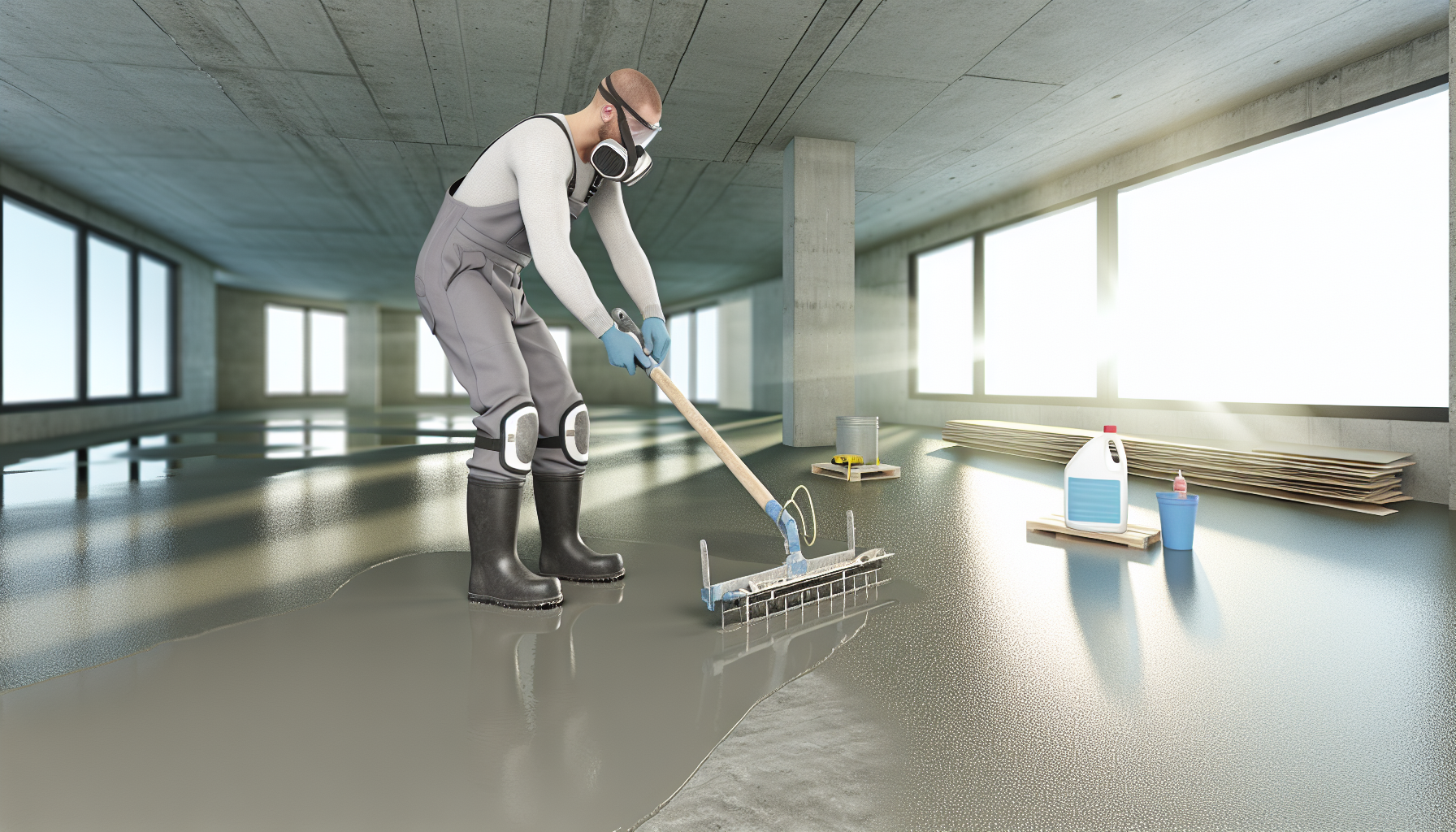
Self Leveling Floors and Leveling Compounds are advanced flooring solutions designed to create smooth, flat, and durable surfaces by correcting dips, cracks, and uneven concrete. These high-performance materials flow easily, settle to their own level, and prepare subfloors for tile, vinyl, hardwood, and other modern floor finishes.
Self Leveling Floors and Leveling Compounds are advanced flooring solutions designed to create smooth, flat, and durable surfaces by correcting dips, cracks, and uneven concrete. These high-performance materials flow easily, settle to their own level, and prepare subfloors for tile, vinyl, hardwood, and other modern floor finishes.
Definition and purpose
Self leveling floors are high-performance surfaces created using specially formulated leveling compounds that flow and spread across a substrate, seeking their own level. Unlike traditional concrete, these materials are designed to create perfectly flat, smooth backgrounds for finished flooring. The terms self leveling floor, leveling compound, floor leveling compound, concrete floor leveling, and self leveling concrete are often used interchangeably, but all refer to cementitious or synthetic systems that eliminate abrupt heights or dips, preparing floors for coverings like tile, vinyl, or hardwood. The primary purpose is to efficiently correct surface irregularities—such as cracks, dips, and waves—which are often unacceptable for modern resilient and rigid floor coverings.
Types of self leveling products
Leveling compounds fall into several categories, each tailored for specific needs and substrates:
- Cement-based self leveling underlayments: Polymer-modified Portland cement blends, rapidly hardening, used beneath decorative floors.
- Gypsum-based compounds: Often used in renovations over wood substrates, providing smoother finishes with minimal shrinkage.
- Self leveling concrete toppings: Meant for use as a wear surface, not just a preparatory layer.
- Epoxy and polyurethane-based compounds: Used in industrial and chemical-resistant applications.
Typical installation thicknesses range from 3 mm (1/8 in) up to 50 mm (2 in) in a single pour, depending on the product. The flow behavior can be likened to thick pancake batter, spreading under its own weight but not becoming watery or separating.
When to use an underlayment vs a topping
Choosing between underlayments and toppings depends on intended use:
- Underlayments are designed to provide a flat base for subsequent floor finishes. They must not be left exposed.
- Toppings are engineered to serve as finished, walkable surfaces—ideal for commercial or industrial use when aesthetics and durability are essential.
Polymer additives in self leveling compounds play a crucial role: they reduce water demand, improve bond strength to various substrates, and enhance flexural strength.
Comparison with traditional concrete and self-consolidating concrete
Self leveling compounds should not be confused with traditional concrete or self-consolidating concrete (SCC). Standard concrete requires manual placing and screeding, and typically cannot be poured at thicknesses under 25 mm (1 in) without risking cracking. SCC, though flowable, is designed for forming rather than precision skimcoating. Self leveling floors use advanced admixtures—such as polymers and superplasticizers—to deliver high viscosity yet self-smoothing flow, ensuring seamless coverage even at minimal depths.
Common use-cases for self leveling concrete and leveling compounds span residential apartments (for vinyl or wood flooring), commercial spaces (shopping malls, offices), and industrial settings (factories, warehouses), wherever precise floor tolerances are critical.
By mastering the distinctions between these self leveling and floor leveling compound technologies, professionals can select the right system for their project— a topic explored in greater technical depth in the next chapter on materials composition and properties.
Comparison of Self Leveling Floors and Leveling Compounds with Traditional Concrete and Self-Consolidating Concrete
Base chemistries
- Cementitious (polymer-modified Portland cement) compounds dominate self leveling concrete and leveling compound products. These blends typically use ordinary Portland cement (OPC) as the backbone, enhanced with redispersible polymer powders for improved flow, bonding, and freeze-thaw durability. Their strengths are versatility, rapid setting, and compatibility with most subfloors, making them suitable for both underlayment and thin topping use. Limitations include shrinkage risk in thicker applications and moisture sensitivity if not properly formulated or cured.
- Gypsum-based floor screeds use alpha or beta hemihydrate gypsum as a binder. These have very low shrinkage, are fire-resistant, and achieve excellent surface smoothness. However, gypsum compounds are not suitable for wet environments (e.g., bathrooms) and should not be installed where prolonged dampness or high vapor emission is possible. They are most common in European markets and specific radiant heating installs.
- Specialty resin systems (such as epoxy, polyurethane, or methyl methacrylate) offer rapid cure, chemical resistance, and ultra-thin build capability. These are reserved for specialty industrial or remedial use due to higher cost and strict application parameters.
Additives and performance modifiers
- Polymers (acrylics, styrene-butadiene) boost adhesion and flexural strength, and are critical for bonding to substrates and resisting shrinkage cracking.
- Superplasticizers (polycarboxylates, lignosulfonates) dramatically increase flow (‘self leveling’ ability) at low water-cement ratios, reducing bleed and segregation.
- Defoamers minimize entrapped air and eliminate pinhole formation for a dense finish.
- Set accelerators and retarders adjust pot life and working time, crucial for adapting to project scale and site temperature.
- Microfibers help control plastic shrinkage and early-age cracking, especially in larger pours or where rapid drying occurs.
Mechanical and physical properties
- Compressive strength: Cementitious leveling compounds typically achieve 3,000–5,000 psi (21–35 MPa) at 28 days; commercial toppings may reach 6,000+ psi (40+ MPa). Gypsum-based types are generally lower, ~2,500–3,500 psi (17–24 MPa).
- Tensile/flexural strength: Enhanced by polymer-modification; values commonly 8–15% of compressive strength.
- Thickness: Most self leveling concrete is applied at 3–10 mm (1/8–3/8 in). Some products can feather-edge, others have recommended maximums (often 25–50 mm / 1–2 in) before multiple lifts are required.
- Moisture sensitivity: Cementitious types may absorb moisture post-cure, risking debonding or flooring failures if vapor emission exceeds product limits. Choose vapor-barrier compatible types for high-MVER slabs or when topping with impervious flooring.
- Vapor permeability: Varies; many underlayments allow moderate vapor passage, while resin systems provide barriers.
Typical drying and curing behaviour
- Working time: Pot life ranges from 15–40 minutes (at 21°C/70°F), with flow maintained for 15–30 minutes before setting begins.
- Bleed: Minimal in well-formulated products; excessive water creates weak surface layers (laitance) and must be avoided.
- Final curing time: Light foot traffic is often possible in 2–4 hours. Most floor coverings (vinyl, tile, wood) require 16–24 hours minimum, or until residual moisture falls below specified limits (per manufacturer datasheets).
- Temperature/humidity effects: Low temperatures slow cure; high temps or drafts can cause rapid set and shrinkage cracking. Maintain ambient 10–30°C (50–85°F) and relative humidity 40–70% during and after install.
- For fast-track or thick applications, choose a product with appropriate maximum thickness, rapid-drying additive package, and proven performance in your climate/site conditions. For moisture-sensitive floor coverings, always confirm compound vapor characteristics and follow recommended drying protocols.
Preparing the Substrate and Site for Successful Self Leveling Floors
Surface assessment and testing
Before applying any self leveling floor or concrete floor leveling product, a thorough assessment of the substrate is essential. Surface inspection should identify any potential causes for bond failure or uneven leveling. Follow this checklist:
- Flatness and Levelness: Check with a straightedge or laser for high/low spots. Most leveling compounds require flatness deviations of less than 3mm over 2m spans (check product datasheet for limit).
- Delamination and Weak Zones: Tap with a hammer or use a chain drag to detect hollow-sounding or debonded areas; mark for removal.
- Oil, Grease, and Contaminants: Visually inspect and test for absorption—suspect dark spots or water beading for contamination. Clean stains with degreaser; contaminated slabs may need grinding.
- Concrete Strength: Test surface with a scratch tool or pull-off gun. Concrete must usually exceed 15-20 MPa (check compound specs).
Cleaning and mechanical preparation
Mechanical surface prep ensures field adhesion. Adhere to these steps:
- Vacuum or sweep all debris, dust, and loose materials.
- Remove adhesives, paints, sealers, and curing compounds with shot blasting or diamond grinding.
- Sand smooth areas for better primer penetration.
Moisture and pH testing
Moisture is a leading cause of failure for self leveling concrete and floor leveling compound. Use proper testing:
- Relative Humidity Probes: Inserted at slab depth; passing is generally ≤75% RH, though some products tolerate higher—check datasheet. Failing is persistent high RH or rising levels over 24-72 hrs.
- Calcium Chloride Tests: Envelope area and measure moisture emissions; passing is ≤3 lbs/1000 sq ft per 24 hours for most compounds. High values require mitigation.
- pH readings should be 7–10 for best adhesion; outside this range, use pH stabilizers.
Repairing defects and treating joints
Address all visible cracks, spalls, and surface imperfections:
- Crack Stitching: Route cracks and fill with epoxy or polymer repair mortar.
- Patching: Fill holes and low spots with manufacturer-approved patching compound.
For expansion and control joints:
- All live expansion joints must be honored—install termination strips to prevent bridging.
- Static control joints may be filled with flexible joint filler flush to surface if approved by compound manufacturer.
Priming and adhesion strategies
Primer compatibility with substrate is critical:
- Use penetrating or epoxy primers for very dense/smooth concrete, terrazzo, or tile surfaces.
- Plywood or porous concrete may require multiple coats of primer for uniform absorption.
- Allow primer to dry tack-free, but never beyond the recoat window; excessive drying reduces bond.
Site environmental controls and safety
Achieve a stable, safe site per manufacturer recommendations:
- Enclose area to prevent wind/drafts and dust intrusion.
- Ensure ventilation for curing without creating rapid temperature/humidity swings (generally 10–30°C and RH ≤70%).
- Wear PPE: safety glasses, gloves, dust masks/respirators.
- Set up spill containment and keep unauthorized personnel out of prep zone.
Proper substrate and site preparation is fundamental for the next stage: thorough mixing and flawless application of leveling compounds.
Mixing and Application Best Practices for Self Leveling Floors: Step-by-Step Installation
Essential Tools and Equipment:
- Electric mixer/dual paddle-mixer or mixing station
- Pumps (for larger pours)
- Measuring buckets, graduated containers
- Gauge rake and depth markers
- Smoother or trowel
- Spiked roller (de-aeration tool)
- Approved primer for substrate
- Personal protective equipment (PPE): gloves, safety glasses, dust mask/respirator
- Pre-Application Checklist
- Verify substrate is properly prepared, cleaned, tested and primed (see previous chapter).
- Confirm temperature and humidity meet manufacturer’s requirements.
- Mask off adjacent surfaces and ensure adequate ventilation.
- Lay out mixing station and provide clear access to work area.
- Priming
- Apply primer recommended by the leveling compound supplier.
- Allow to dry fully; never pour compound on tacky primer unless the datasheet specifically says so.
- Measuring and Mixing
- Read product datasheet for exact water-to-powder ratio and working time — do not estimate.
- Add measured water to a clean mixing bucket, then pour powder in while running the mixer.
- Mix at manufacturer-specified rpm (usually 300-650 rpm) for 2-3 minutes, scraping sides as needed.
- Stop and let stand for 1 minute for deaeration, then briefly remix.
- Avoid overwatering—excess water weakens the floor and causes cracking or poor coverage.
- Pouring and Spreading
- Start along the far wall, progressively moving backward toward your exit.
- For larger jobs, use pumps; for smaller areas use mixed buckets, always keeping a “wet edge.”
- Pour in ribbons near the wall or edge, then quickly spread to approximate thickness with a gauge rake set to your desired depth.
- Finishing and Deaeration
- Level and lightly smooth with a finishing trowel or smoother.
- Immediately run a spiked roller in multiple directions to release trapped air and eliminate pinholes. Work quickly—most products have 15–30 minutes of working time.
- Blend overlaps gently for seamless results.
- Timing and Curing
- Never go back over partially set material—work within the specified open time.
- Protect surface from foot traffic or dust until initial cure (typically 2–24 hours, per datasheet).
- Observe minimum waiting time before recoating or installing flooring.
Troubleshooting Application Issues:
- Pinholes or bubbles: Incomplete priming or poor deaeration—ensure proper primer and thorough spiked rolling.
- Poor flow or ridges: Low temperature, expired product, or insufficient mixing. Discard batch if unworkable.
- Rapid setting: High ambient temperature, over-mixing, or water outside guideline—mix smaller batches and use cool, clean water.
- Cracking: Overwatering or pouring too thick. Always follow max thickness; use lath/reinforcement for thick lifts.
- Bond failure/delamination: Substrate not primed, contaminated, or too smooth—ensure substrate is adequately prepared (see previous chapter).
Safety Notes:
- Wear gloves, goggles, long sleeves, and a dust mask rated for fine cementitious particles.
- Use a respirator in enclosed spaces; minimize mixing dust by pouring powder slowly and mixing at low speed.
- Clean skin and tools promptly; avoid prolonged contact with wet compound.
Always use the manufacturer’s datasheets for critical procedures and timing. For guidance on finishing, compatible floor coverings, long-term maintenance, and advanced troubleshooting, refer to the next chapter.
Finishing Options, Maintenance, Product Selection, and Troubleshooting for Self Leveling Floors
Selecting the right product for your project
- Substrate Type: Assess if you are leveling over concrete, wood, or tile—choose formulas compatible with your base for bonding and flexibility.
- Final Covering: For carpet, vinyl, wood, or tile, check manufacturer specs for suitability, especially for resilient floors sensitive to moisture or imperfections.
- Load Requirements: Anticipate residential foot traffic, commercial rolling loads, or industrial forklifts when selecting compressive and flexural strength.
- Moisture Conditions: Select moisture-tolerant or rapid-drying compounds if working on slabs with known vapor issues or in basements.
- Application Thickness: Verify the product’s minimum and maximum pour depths for your floor’s flatness or slope correction.
- Cure Time: Fast-setting options are ideal for rapid turnarounds, while extended cure is best where premium strength is primary.
- Cost & VOCs: Budget for coverage rates and check for low-VOC formulations in living and healthcare areas.
Product checklist:
- Residential: Floor-leveling compound for wood or concrete subfloors, fast-drying, low-VOC, compatible with laminates or carpet.
- Commercial: Medium to high-strength, high-flow self-leveling for large areas, suitable for glue-down LVT, carpet tile, or terrazzo.
- Industrial: Heavy-duty underlayment or topping, high impact resistance, tolerates load and occasional moisture exposure.
Finishing and preparing for floor coverings
- Sanding & Polishing: For decorative finishes or premium flatness, mechanically sand or polish the cured surface. Eliminate minor ridges and surface laitance for a smooth substrate.
- Adhesive Application: Test for moisture content before glue-down installations. Ensure surface is clean, dust-free, and within manufacturer’s specified pH and absorbency range.
- Epoxy/Sealer Use: For exposed-leveling surfaces, prime and roll on compatible epoxies or polyurethane sealers for dustproofing, light chemical resistance, and ease of cleaning.
- Timing: Wait for the recommended cure time, usually 12–48 hours, and check for dryness and strength before installing any floor covering.
Decorative and protective finishes for toppings
- Stains and Dyes: Pigmented stains or integrally colored compounds can create decorative concrete looks for finished floors.
- Polished Concrete: Progressive polishing and densifying provide a medium-gloss, seamless finish for modern or commercial spaces.
- Clear Sealers and Coatings: Use urethane, epoxy, or acrylic sealers over toppings to lock out stains and abrasion, especially in traffic pathways or kitchens.
Common failures and how to fix them
- Blistering: Caused by rapid moisture loss or vapor pressure. Sand down, re-prime, patch, and check moisture control practices before re-application.
- Delamination: Poor substrate prep or bonding primer omission. Abrade and clean as needed, apply recommended primer, and feather a new layer to blend.
- Shrinkage Cracks: Caused by overwatering or rapid drying. V-cut and fill with epoxy or polymer patch compounds, then reseal the entire area.
- Curling: Often from thick applications or uneven drying. Sand high spots, fill lows with repair mortar, and take preventative action next time with consistent thickness and environment control.
- Ongoing Moisture Issues: Persistent dampness may require mitigation membranes beneath the leveling, or installation of a vapor barrier before covering.
Routine maintenance and long term performance
- Periodic Inspections: Check for signs of cracking, wear, or debonding—especially at control joints and edges.
- Cleaning: Sweep or damp-mop regularly; avoid harsh acids or saturated water cleaning, which can degrade most leveling compounds and toppings.
- Re-sealing: Renew sealer layers every 1–3 years; high-traffic areas may require more frequent touch-ups.
- Prompt Repairs: Address any damage or moisture ingress promptly to prevent growth of issues beneath floor coverings.
Conclusions
Summary Proper selection, preparation, and application of self leveling concrete and floor leveling compounds are essential for successful floor installations. Control substrate moisture, use appropriate primers, mix and apply within manufacturer limits, and respect thickness and curing times. With correct technique and product choice you can achieve flat, durable substrates ready for any finish, reducing callbacks and extending the life of floor coverings.

[…] with professional help—always referencing local climate and materials. For inspiration, our flooring prep guide or tile care tips help with finishes that complement natural elements […]