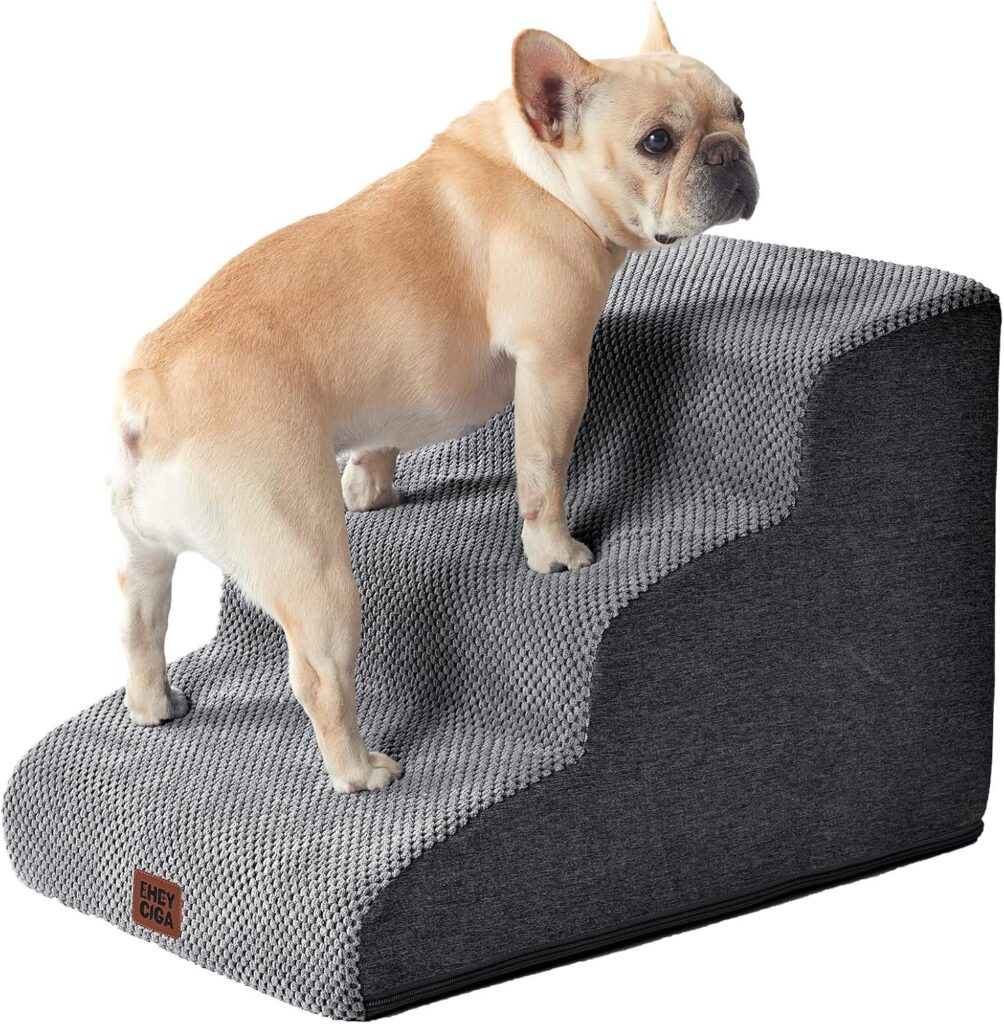
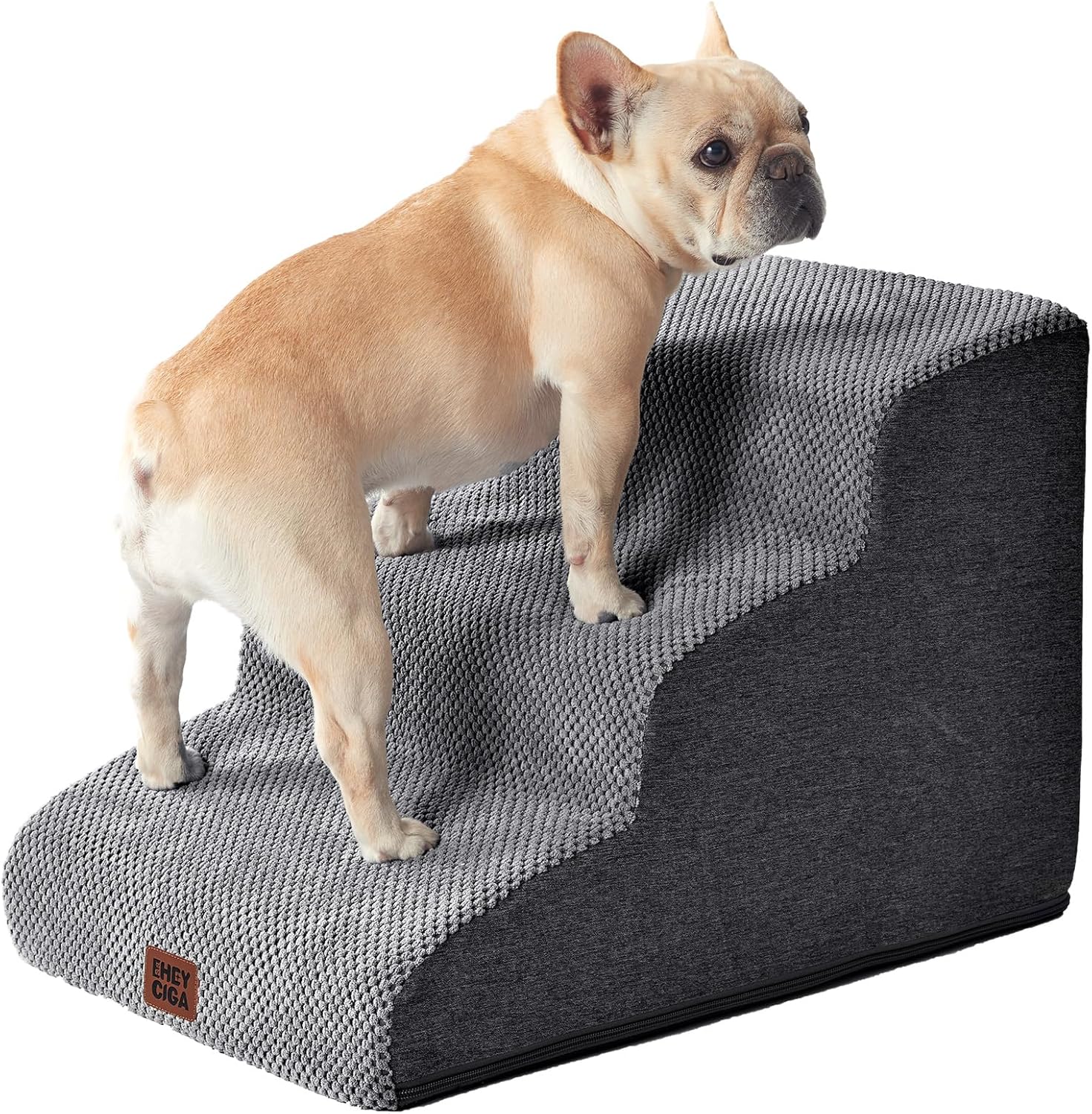
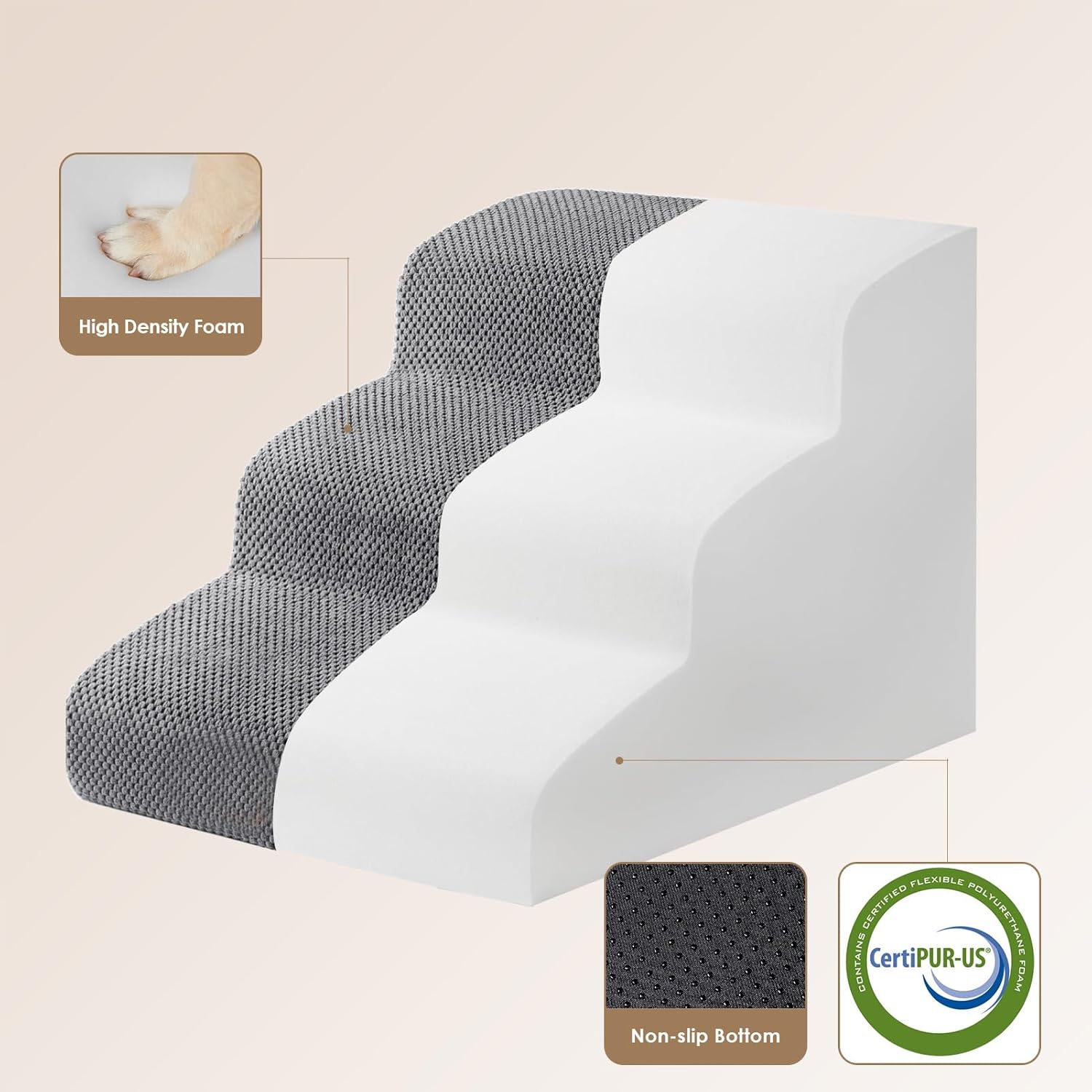
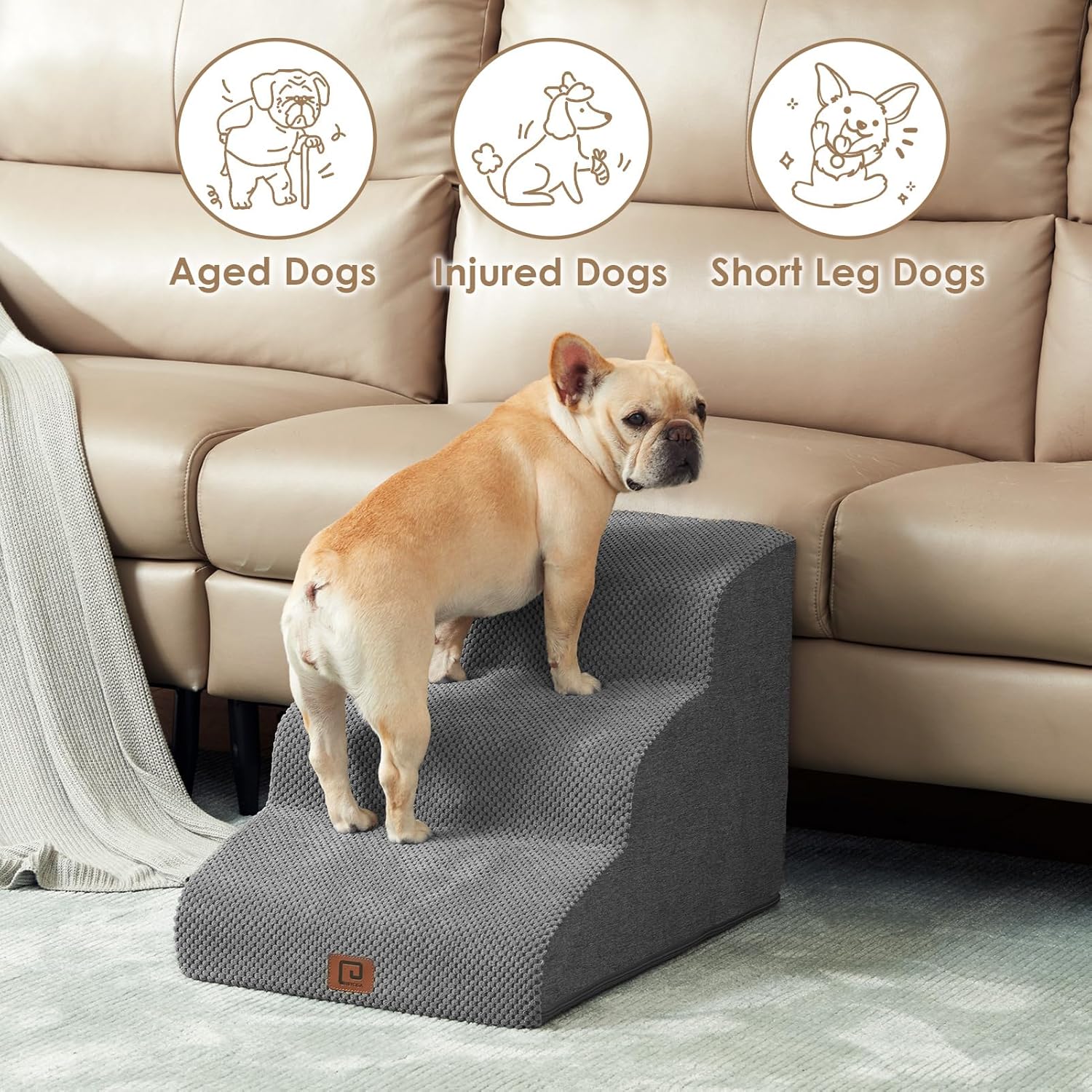


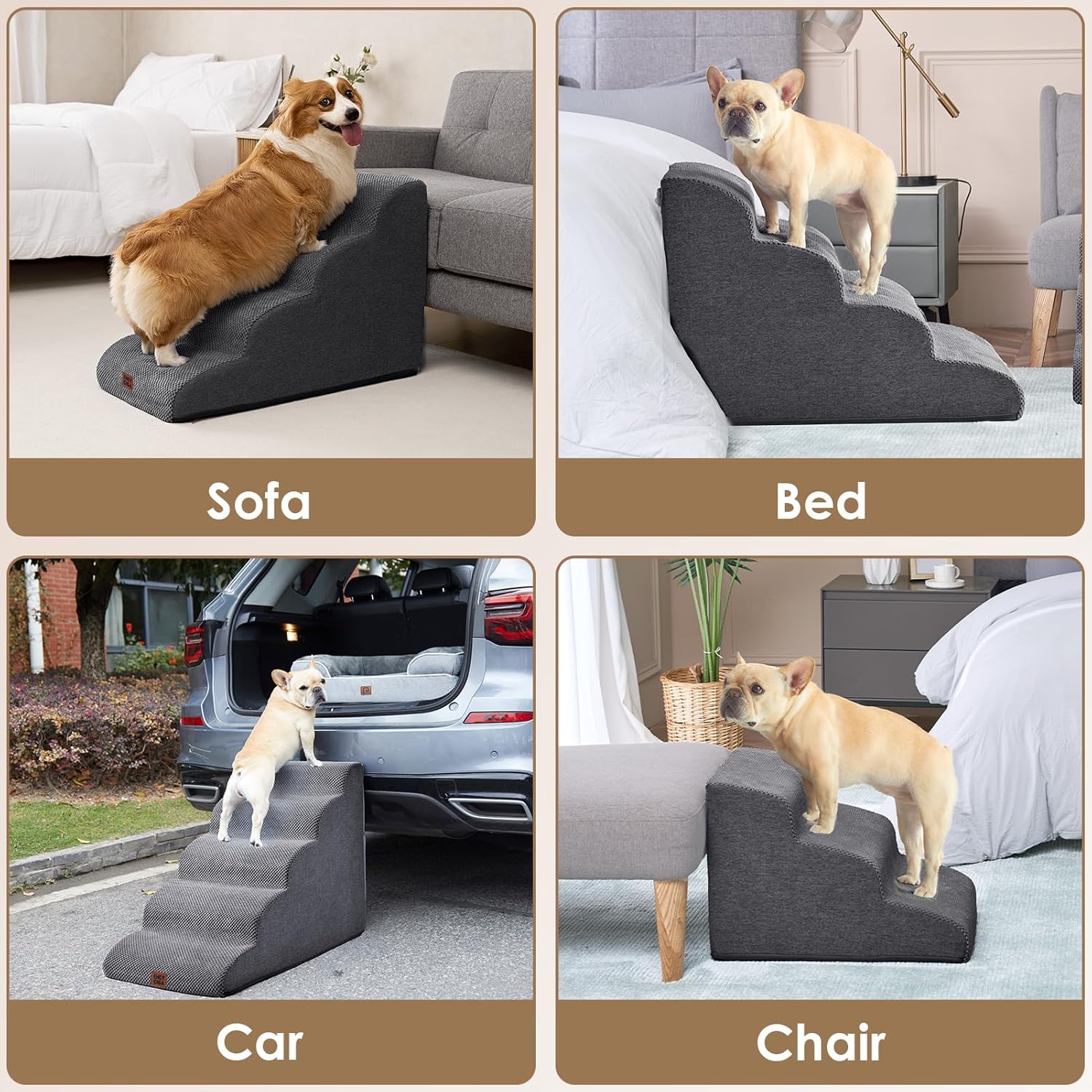
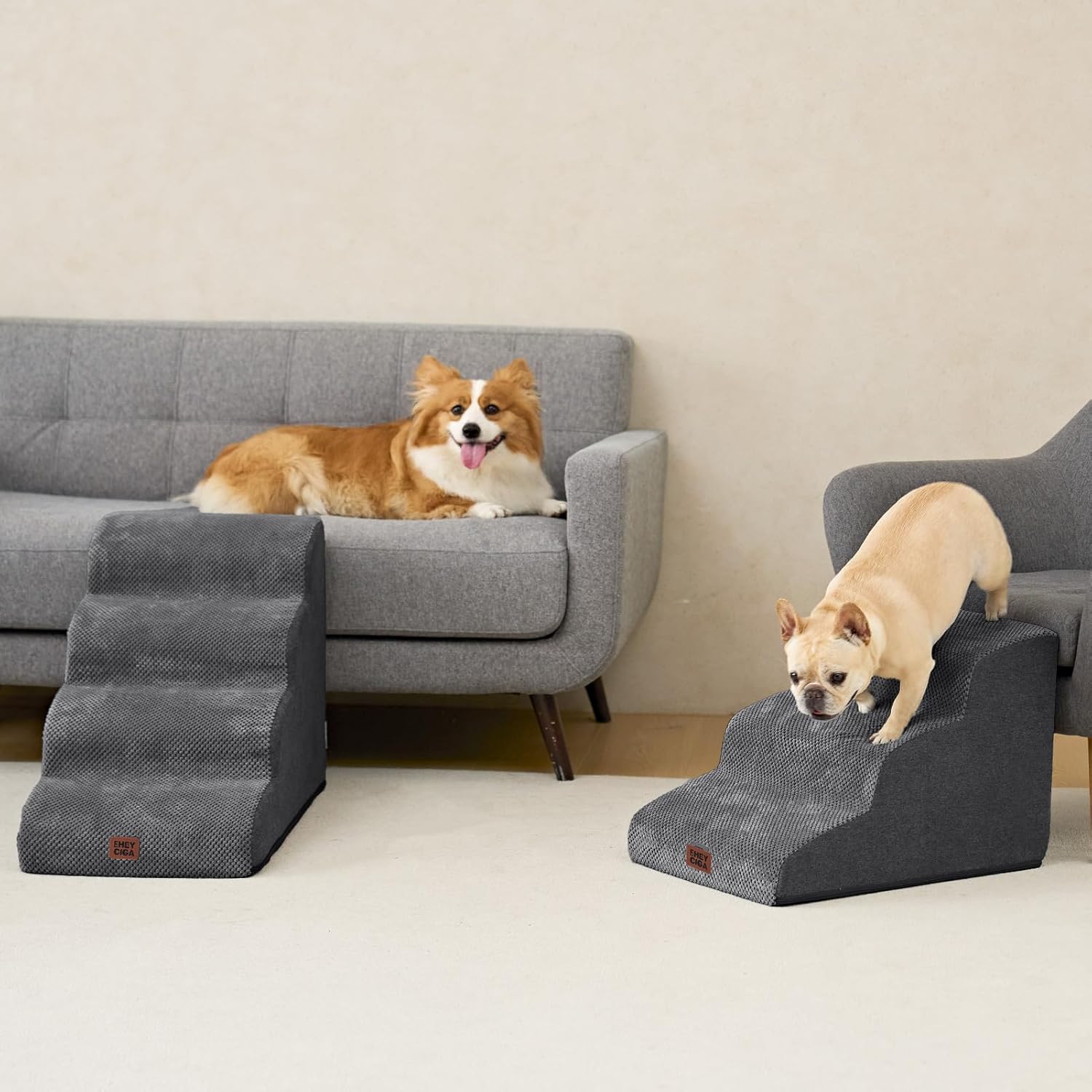
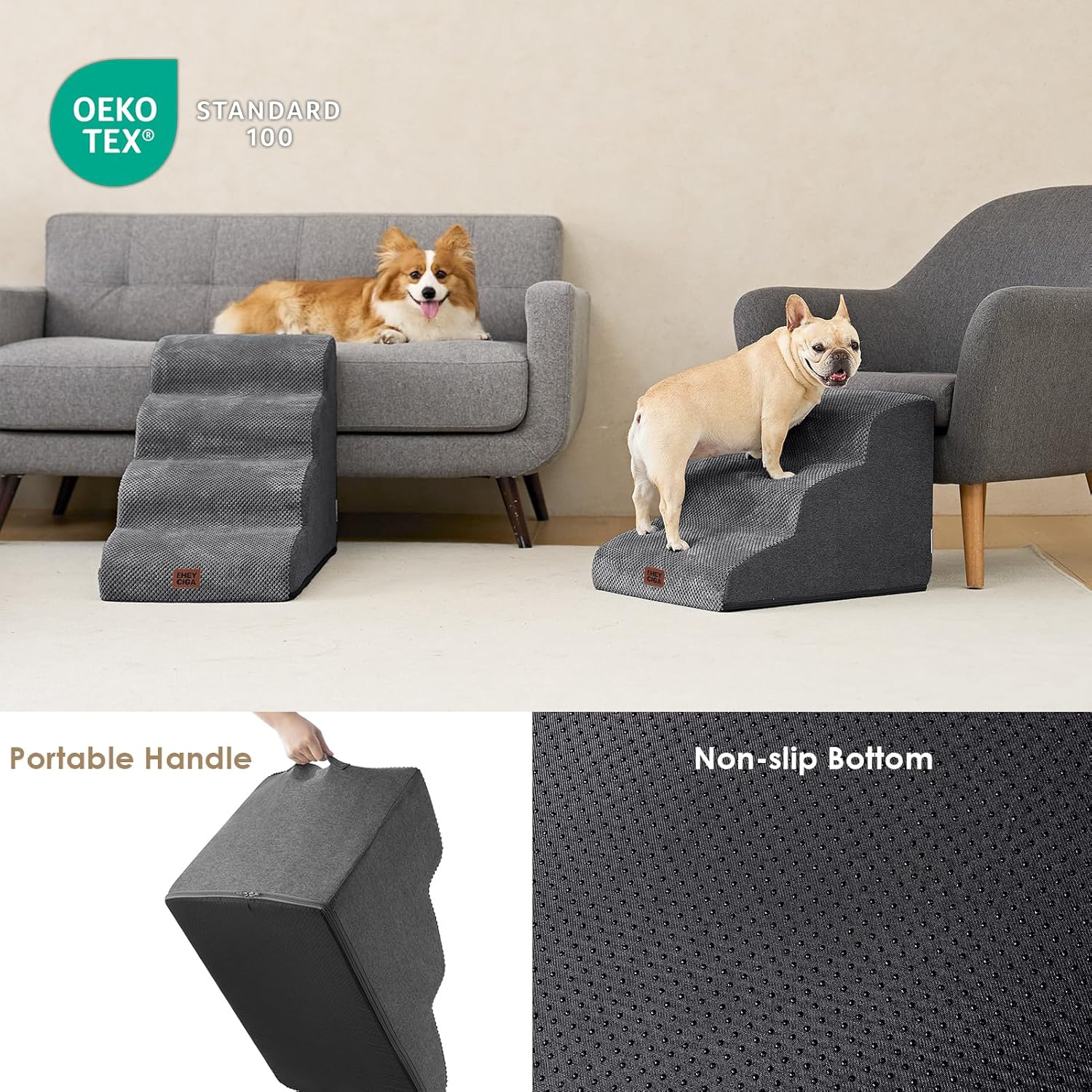


The EHEYCIGA Pet Stairs provide a safe, stable way for small dogs and cats to reach high beds, sofas, or couches with ease. Featuring a non-slip surface, high-density foam, and a removable washable cover, these stairs ensure comfort and durability for everyday use. Perfect for aging or small pets—give your furry friend the freedom and support they deserve. Explore this pet essential today!
Dog stairs for bed are one of those purchases that feel “optional” until the day your dog hesitates before jumping, slips on the landing, or starts needing to be lifted up and down multiple times a day. I like pet steps because they’re a simple mobility aid: they reduce repeated impact from jumping and make it easier for small dogs, senior dogs, and dogs with joint issues to access the places they love most—your bed and your couch.
In this guide, I’m reviewing the EHEYCIGA foam dog stairs (the non-slip, balanced style with a washable cover) and showing you how I choose the right height, place it so it doesn’t slide, and train a dog to use it confidently.
Why dog stairs for bed matter (more than most people think)
Jumping onto a high bed looks harmless… until it isn’t. For small dogs, long-backed breeds, and older dogs, repeated jumping can increase stress on joints and the spine, and it can also lead to awkward landings. The AKC notes that dogs with arthritis or mobility issues may benefit from dog stairs or a ramp to reach elevated areas more safely.
I also think of dog stairs for bed as a home safety feature. It’s similar to adding a non-slip rug runner on hardwood floors: you’re reducing the chance of an accident during normal daily life. If your dog sleeps in your room and hops on/off the bed several times a day, reducing that impact adds up over months and years.
EHEYCIGA dog stairs for bed: what you’re getting
The EHEYCIGA foam dog stairs are designed to sit flush against furniture (bed, sofa, chair) so pets can climb up and down comfortably. The brand emphasizes a “steady” foam build (listed as high-density foam in the 30D–33D range depending on listing) to provide stronger support while pets walk up and down.
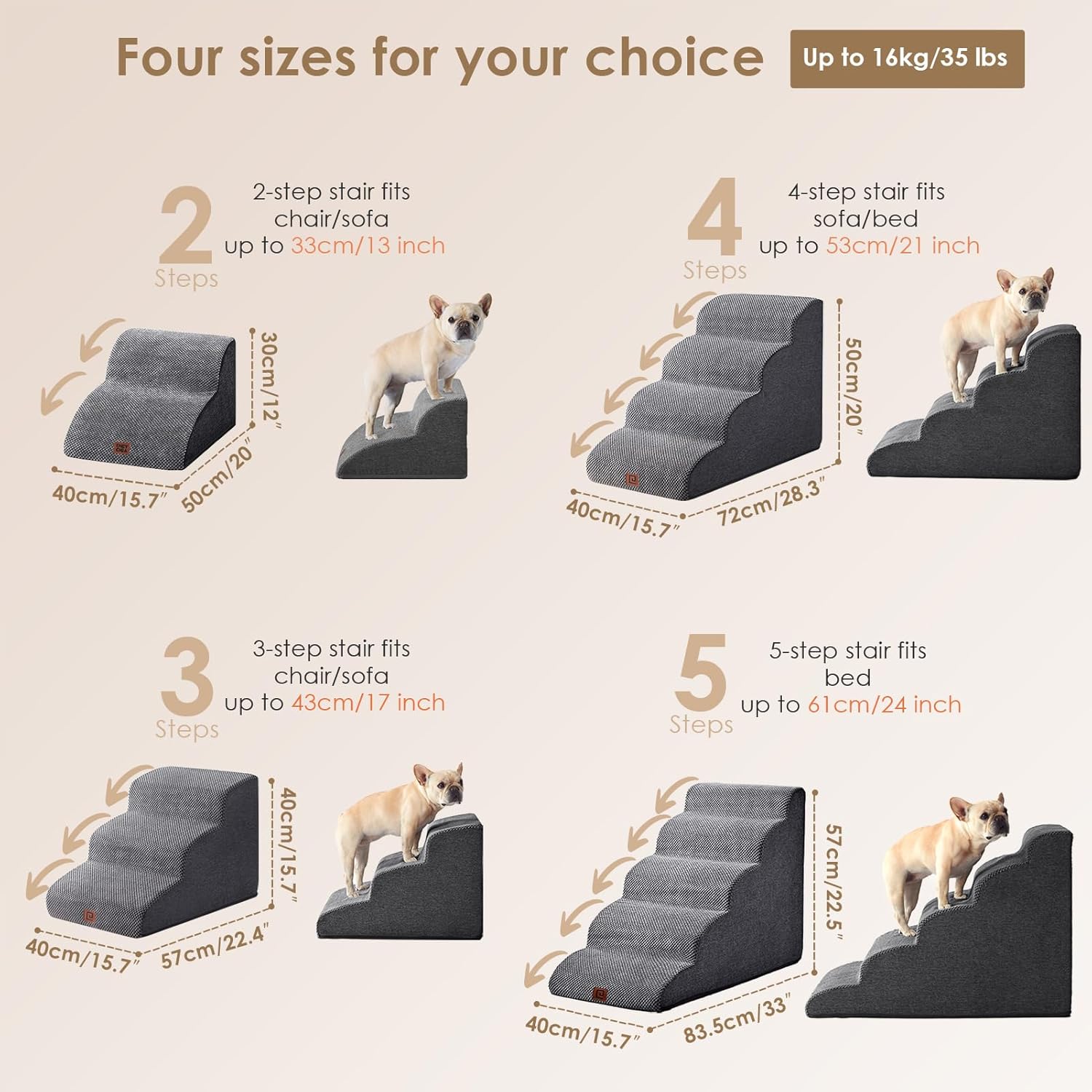
The cover is described as removable and washable (hand wash or machine wash), which matters because pet steps collect hair, drool, and “outside paws” fast. Most importantly for real homes, the stairs come in multiple step counts/sizes, with guidance like: 2-step for ~13″ furniture, 3-step for ~17″, 4-step for ~21″, and 5-step for ~24″ (some listings also describe variants fitting up to ~27″).
Product mention: EHEYCIGA Dog Stairs for Bed (no link placeholder per your rule).
How I choose dog stairs for bed height (so my dog doesn’t “half-jump”)
The biggest mistake I see is buying dog stairs for bed that are too short. When that happens, dogs still jump the last part—so you get less benefit and more risk.
My measuring method (takes 2 minutes)
- Measure from the floor to the top of your mattress (not the frame).
- Compare that height to the brand’s recommended furniture height for each step count.
- Pick the size that lets your dog step onto the bed with the smallest final “hop.”
EHEYCIGA’s guidance (varies slightly by listing) generally maps step counts to common furniture heights, which makes selection easier than guessing.
Quick cheat sheet
- Couch/low bed: 2–3 steps often work best.
- Standard bed height: 4 steps often fits.
- High beds: 5 steps is often the safer pick if your dog is small or hesitant.
If your dog is between sizes, I generally size up (more steps) because lower step height usually feels more confident and joint-friendly.
Dog stairs for bed vs dog ramp (which I choose and why)
This question comes up constantly, and it’s a fair one.
PetMD explains that some dogs benefit from stairs while others do better with ramps, depending on factors like size, age, mobility limitations, and the height they’re trying to reach. The AKC similarly notes that stairs or ramps can help seniors and dogs with arthritis or mobility issues, and which one is best depends on the dog and the scenario.
When I choose dog stairs for bed
I choose dog stairs for bed when:
- My dog is a confident stepper and can lift paws comfortably.
- I need something compact next to a bed or couch.
- The stairs have a stable, grippy surface so my dog doesn’t slide.
When I choose a ramp instead
I lean toward a ramp when:
- A dog has more significant arthritis or struggles lifting legs high.
- The dog is very large or heavy, and I want a more gradual incline.
- The dog has a spinal risk profile (long-backed breeds) and does better with a continuous slope.
EHEYCIGA’s foam stairs can feel “ramp-like” because some models have a lower-angle slope design, but they’re still stairs and require stepping.
What I look for in dog stairs for bed (my buying checklist)
Here’s my real checklist for steps that actually get used.
Stability and grip
- Non-slip base or anti-slip design: prevents sliding on hardwood/tile.
- High-density foam + support: reduces wobble and sag under weight.
- Wide steps: gives small dogs room to place paws confidently.
Comfort
- Soft cover: helps paws feel secure (especially for seniors).
- Low step rise: reduces joint hookups.
Cleaning and durability
- Washable cover: non-negotiable in my house.
- Foam expansion note: many foam stairs ship compressed and need 24–48 hours to fully expand.
How I set up dog stairs for bed so they don’t slide (hardwood-proof setup)
Even “non-slip” steps can slide if the floor is slick enough or the dog hits them at an angle.
This is what I do:
- I place the dog stairs for bed flush against the bed frame so there’s no gap to spook my dog.
- If I have hardwood or tile, I put a thin rubber-grip mat underneath (like the kind used under rugs).
- I angle the stairs so the dog approaches straight-on rather than from the side (side approaches cause more shifting).
- I check the cover fit so it’s not loose or wrinkled on the steps (wrinkles can feel slippery).
EHEYCIGA’s design is intended to sit directly against furniture edges, which helps reduce wobble and makes climbing feel “continuous.”
How I train my dog to use dog stairs for bed (fast, calm, no stress)
Training is where you turn a good product into a daily habit.
My 10-minute training plan
- Let your dog sniff the dog stairs for bed first (no pressure).
- Place treats on the lowest step, then the next step, building a “trail.”
- Reward every step—don’t rush to the top.
- Once up, reward again on the bed so the dog learns “stairs = success.”
- Practice going down slowly; many dogs find going down harder than going up.
If your dog tries to jump instead of climb, I block the jump route temporarily by sitting on the bed edge or using a pillow barrier until the habit forms.
Pro tip for stubborn dogs
Some dogs won’t step onto a new texture. If that happens, I drape a familiar blanket over the steps for a day or two, then remove it once the dog trusts the surface.
Real-life scenarios where dog stairs for bed make a huge difference
Small dogs on tall beds
A high bed is basically a cliff for a Chihuahua, Yorkie, or Toy Poodle. Dog stairs for bed reduce the “launch” that can lead to slips.
Senior dogs who still want the couch
Older dogs often don’t stop wanting comfort—they just lose the ability to jump safely. The AKC notes stairs/ramps can help senior dogs and dogs with arthritis or mobility issues.
Post-surgery or “vet said no jumping”
When a vet limits jumping, stairs can be part of the solution (along with gates and management).
Apartment living (tight space)
I like stairs because they’re compact and stay by the furniture, unlike some ramps that take more floor space.
A quick comparison: EHEYCIGA vs typical wooden stairs vs ramp
Care and cleaning (how I keep dog stairs for bed fresh)
EHEYCIGA describes a removable, washable cover that can be hand washed or machine washed. I wash covers on a gentle cycle and air dry when possible to keep fabric grippy and reduce shrink risk.
Two important notes I follow:
- Foam stairs often ship compressed, so I wait 24–48 hours for full expansion before judging firmness.
- The foam core itself is typically not washable (only the cover), so I protect it by washing the cover regularly.
Common mistakes people make with dog stairs for bed
- Buying too few steps for a high mattress, causing a “final jump.”
- Placing stairs with a gap between the top step and the bed.
- Letting the stairs slide once, which can scare the dog and slow training.
- Training only “up,” not “down,” even though “down” is often harder for cautious dogs.
- Expecting instant love: some dogs need a few days of treats and repetition.
FAQ (SEO-focused)
Are dog stairs for bed safe for small dogs?
Dog stairs for bed can be a safer alternative to repeated jumping, especially for small dogs using high furniture, as long as the stairs are stable and the height matches the bed.
Should I get dog stairs for bed or a ramp?
PetMD notes the best choice depends on your dog’s size, age, mobility, and the height they need to reach; ramps are often better for more significant mobility issues, while stairs can work well for confident climbers. The AKC also notes stairs/ramps can help senior dogs and dogs with arthritis or mobility limitations.
How do I train my dog to use dog stairs for bed?
Use treats to reward one step at a time, practice calm repetitions, and focus on both going up and going down because many dogs find descending harder.
How long should foam dog stairs expand after shipping?
EHEYCIGA’s care instructions note allowing 24–48 hours for the foam to fully expand after removing it from the compression bag.
Do washable covers matter on dog stairs for bed?
Yes—pet steps collect hair and dirt quickly, and EHEYCIGA specifically advertises a removable, washable cover for easier maintenance.