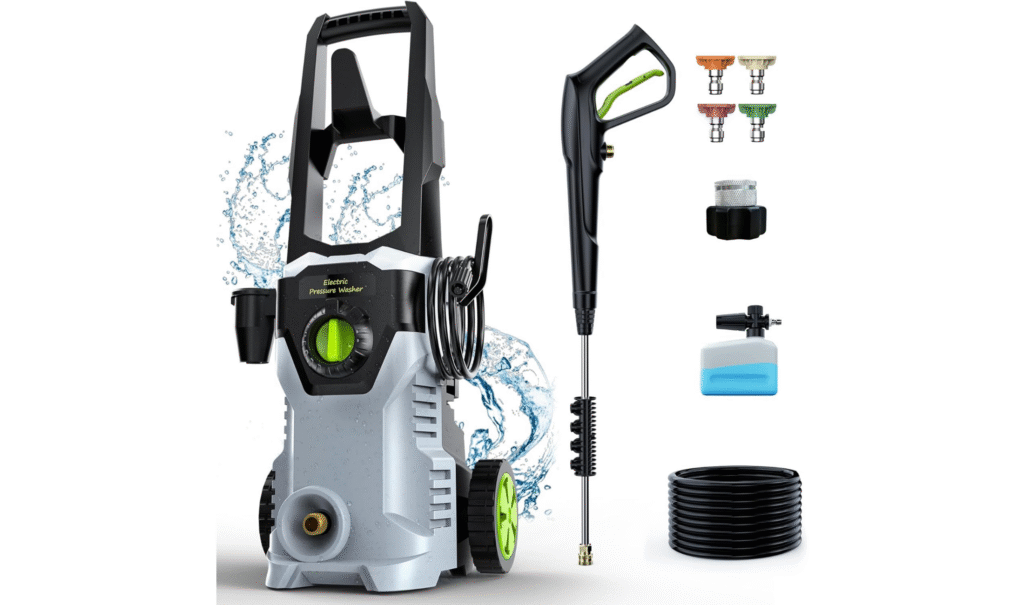
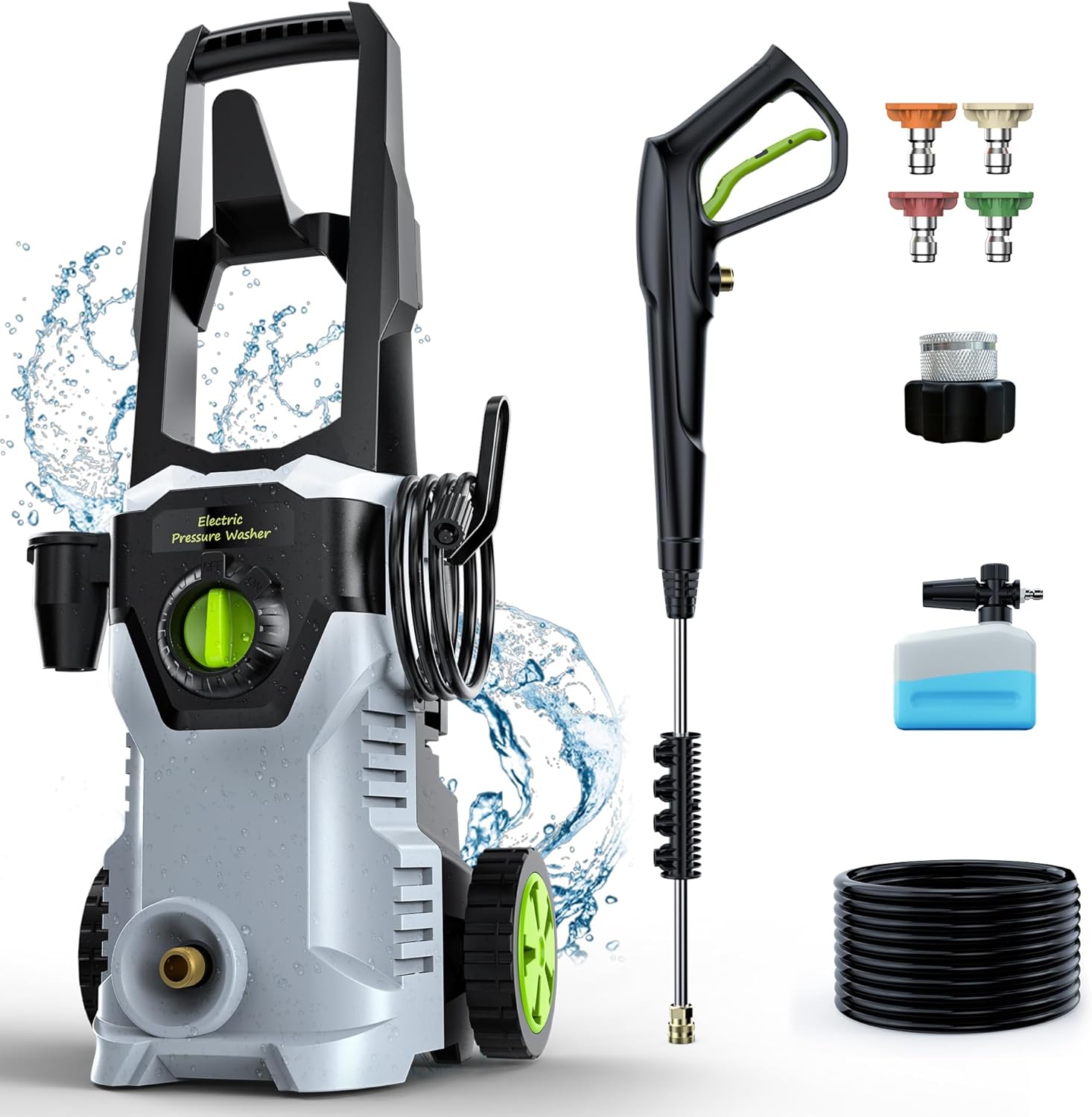
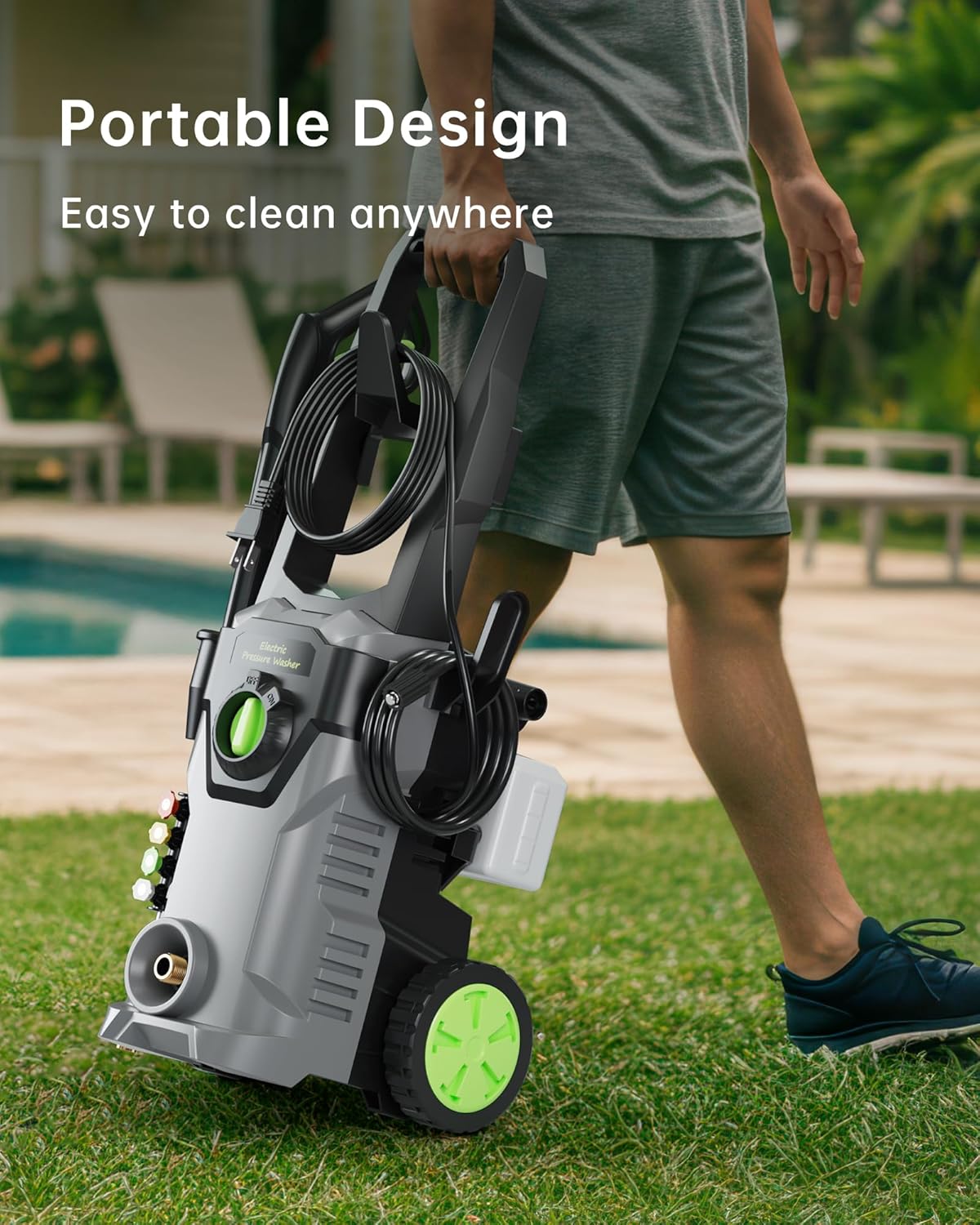
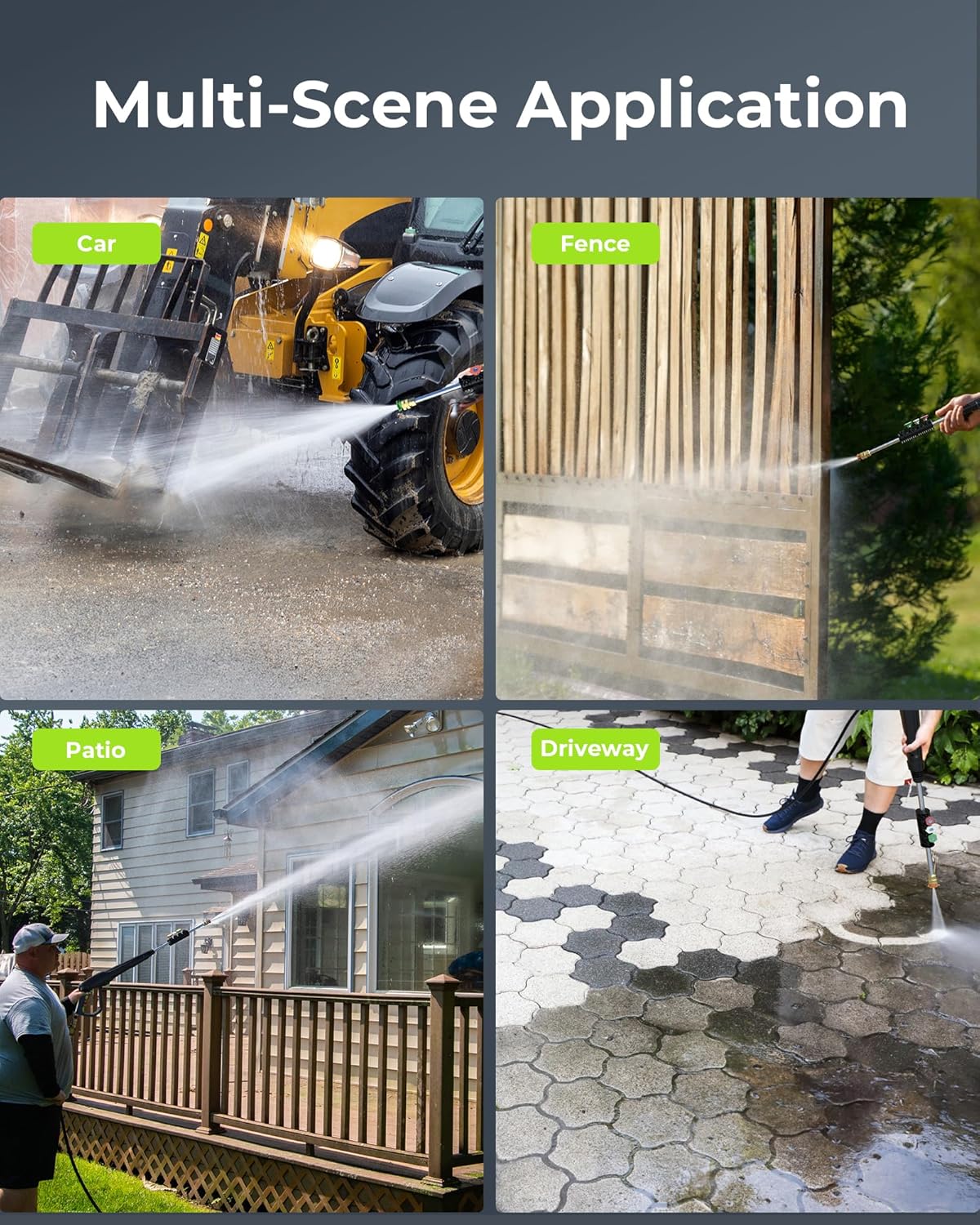

The Patoolio 4800 PSI Electric Pressure Washer delivers powerful cleaning performance for driveways, patios, vehicles, and outdoor surfaces. Designed with a high-efficiency motor, long hose reach, and adjustable nozzles, it ensures deep, precise cleaning every time. Its durable build and easy portability make it ideal for both home and professional use — click to experience effortless power washing today.
An Electric Pressure Washer is my favorite “big impact, low effort” tool for making a home look cared for—especially when outdoor dirt makes patios, entryways, and even outdoor furniture feel permanently dull. When I’m shopping, I’m looking for a machine that’s easy to set up, has practical accessories (nozzles + foam cannon), and gives me enough pressure and flow to save time compared with scrubbing by hand.
The product in this post is the Amazon listing marketed as a “4800 PSI Electric Pressure Washer” for driveways and general outdoor cleaning. (Product mention)
Quick note on “max PSI” claims
With many electric models, the advertised max PSI is not always the same as what you’ll experience at the nozzle during normal use, so I judge an Electric Pressure Washer by real-world cleaning results and design features (nozzles, hose reach, safety shutoff) rather than one big number.
Why I recommend an Electric Pressure Washer (instead of gas) for most people
I like gas machines, but they’re not for everyone. For many households, an Electric Pressure Washer is the better “actually gets used” option because it’s typically lighter, simpler to start, and easier to store.
Here’s where electric wins in day-to-day life:
- Convenience: Plug in and go, with less routine upkeep than gas.
- Great for light-to-moderate work: Popular Mechanics notes electric units are commonly suited for tasks like car washing, light concrete cleaning, and patio furniture refreshes.
- Less intimidating for first-timers: Wider fan nozzles and controlled technique let me clean without feeling like I’m holding a paint-removal cannon.
What I check before buying an Electric Pressure Washer
Before I click “buy,” I run through a simple checklist that keeps me from regretting it later.
PSI and GPM (the combo that matters)
Popular Mechanics highlights that both PSI and GPM matter, and it even uses a garden-hose analogy to show how pressure and flow interact. In plain terms: PSI helps break grime loose, and GPM helps rinse it away and speeds up large-area cleaning.
Nozzles included (this is where versatility comes from)
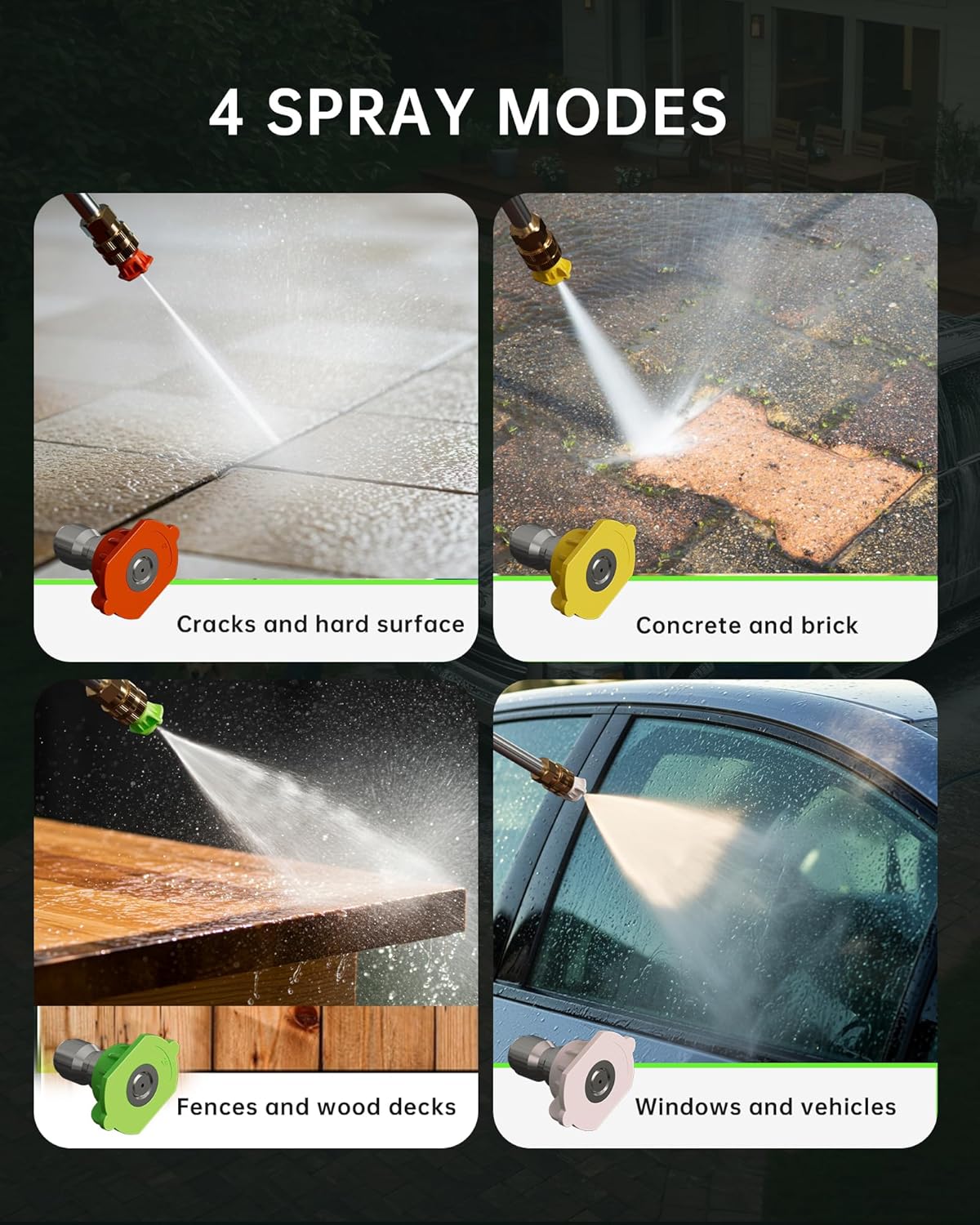
Many “complete kit” electric models include 0°, 15°, 25°, and 40° tips plus a foam cannon, which makes one Electric Pressure Washer work for very different jobs. I treat nozzle choice like selecting the right kitchen knife—using the right one makes everything easier and safer for the surface.
Hose and cord length (reach = less frustration)
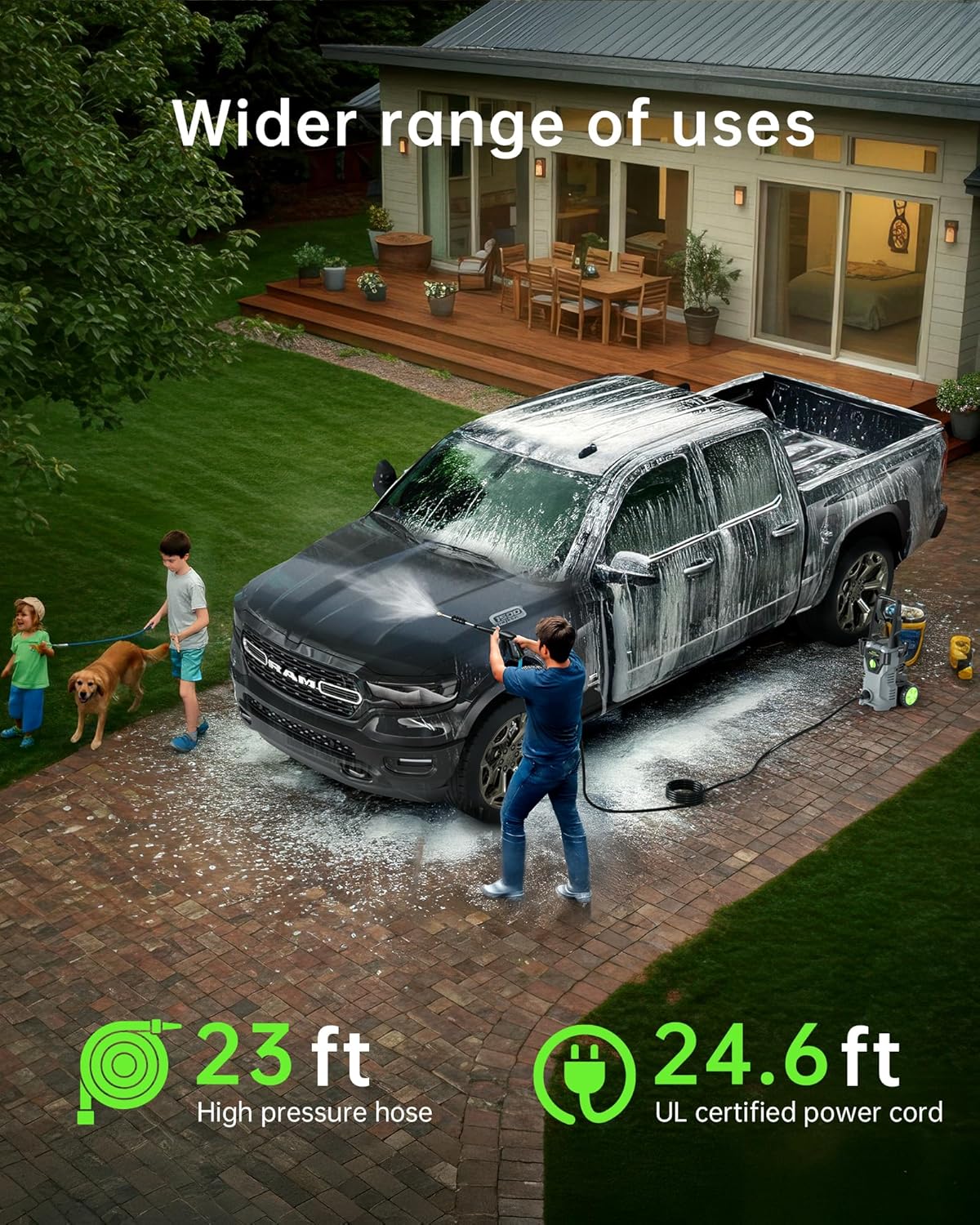
If the hose is too short, I waste time moving the unit every few minutes. Several “4800 PSI” style listings and reviewers mention setups around a 20 ft hose and a longer power cord, which is the type of reach that keeps cleaning from turning into a stop-and-go workout.
The product: “4800 PSI” Electric Pressure Washer (what it’s best for)
This Amazon model is marketed for driveway, car, and patio cleaning, and it’s commonly described (in reviews/videos) with features like multiple nozzle tips and a foam cannon. (Product mention) The reason this matters: for typical homeowners, accessories often change outcomes more than chasing an extreme PSI label.
Where I’d use it around a home
Based on how electric units are commonly used—and what’s repeatedly emphasized in buying guides—these are the jobs I’d plan for:
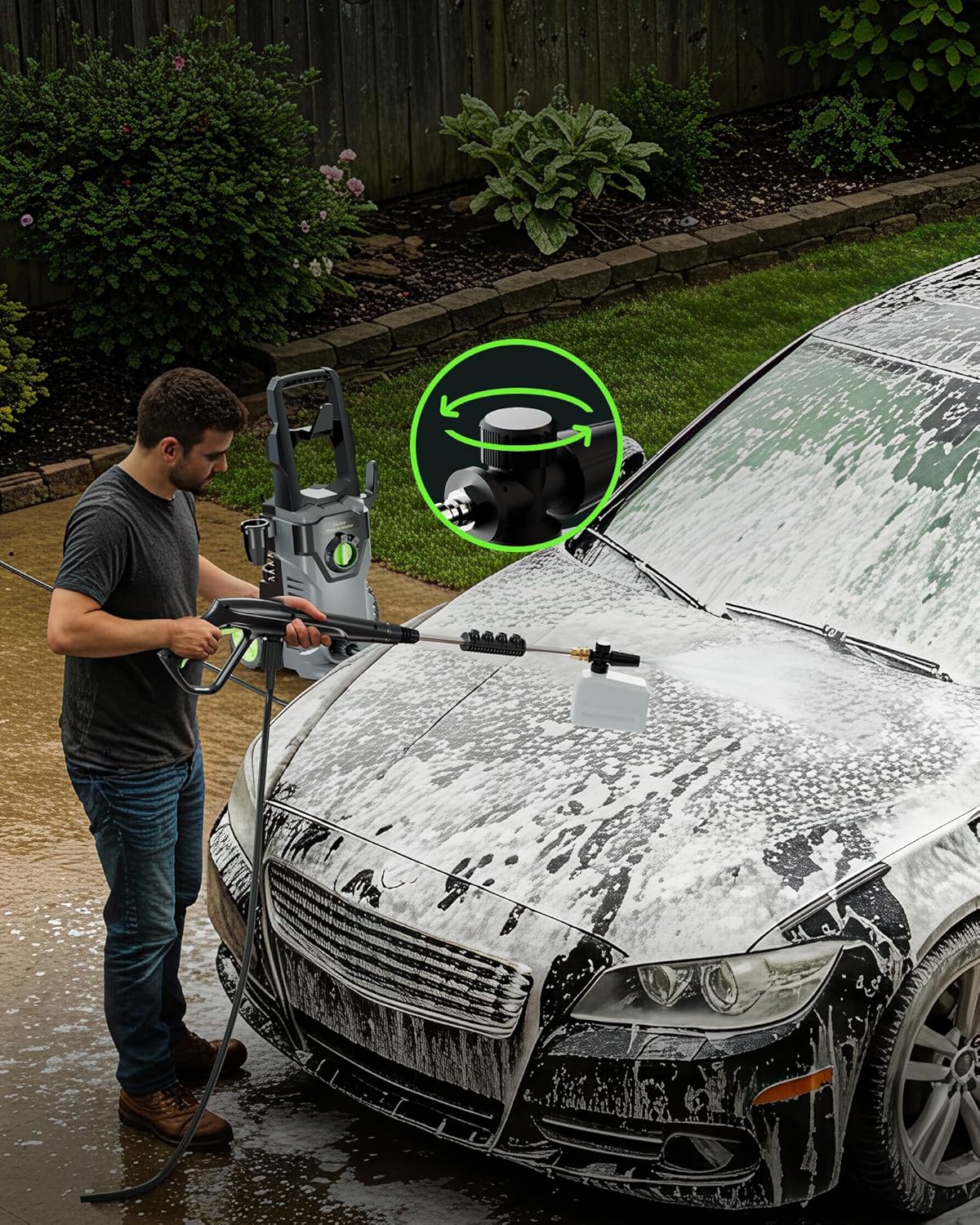
- Cars, bikes, strollers: Foam cannon pre-soak + gentle nozzle selection (usually 40°).
- Patios and outdoor furniture: Wider tips, steady distance, and overlapping passes.
- Driveways and walkways: Slower passes, possible detergent dwell time, and careful use of more aggressive tips only where the surface can handle it.
(Product mention) Electric Pressure Washer “4800 PSI” model [Affiliate Link Here]
Driveway cleaning: what PSI is “enough”?
For driveways, a common guideline is that 2,000–3,000 PSI is a practical range, with higher pressure typically reserved for tougher stains or professional use. Popular Mechanics also notes that heavier concrete/driveway work often benefits from higher PSI and higher GPM, which is why technique and expectations matter with electric models.
How I make an Electric Pressure Washer work better on concrete:
- Dry prep: Sweep grit first so I’m not blasting sand across the surface.
- Pre-wet: Keeps detergent spread smoother and helps reduce streaking.
- Dwell time: Let soap sit briefly (never let it dry).
- Consistent passes: Overlap each pass and keep a steady pace to avoid “zebra striping.”
Car washing: how I avoid paint damage
When I wash a car, my goal is lubrication and rinsing—not maximum pressure. I rely on foam cannon pre-soak and a wide spray tip (often 40°) to reduce risk, then rinse from a safe distance.
My quick car-safe routine:
- Foam it, let it loosen grime, then rinse.
- Keep the wand moving and avoid blasting badges, window seals, and old clear coat at close range.
- Treat the 0° tip as a specialty tool, not a default.
Patio furniture + outdoor rugs (this is the “furniture” angle)
Outdoor furniture is like indoor furniture: it looks great until grime fills the texture and seams, then it suddenly looks older than it is. An Electric Pressure Washer helps me reset plastic wicker, metal frames, and outdoor mats fast—just with the right nozzle and distance.
My furniture-safe rules:
- Start with a wider fan tip and back up.
- Test a hidden spot first (especially on painted or older finishes).
- Use “rinse pressure,” not “strip pressure,” on cushions and fabric (and let them fully dry).
Pet-owner angle: why I like an Electric Pressure Washer for outdoor messes
For pet owners, the value isn’t only “looks clean”—it’s odor control and convenience. I use an Electric Pressure Washer to rinse patios, outdoor potty areas, and washable pet mats, then follow with pet-safe cleaners and a thorough rinse.
Accessories that make a bigger difference than “max PSI”
If I want better results without buying another machine, I add smart accessories. VEVOR’s explanation emphasizes that higher GPM can mean faster cleaning for large surfaces, which is why surface tools and flow-efficient methods help.
My favorite add-ons:
- Surface cleaner attachment for large concrete areas (less streaking, faster coverage).
- Better foam cannon/soap for cars and oily grime pre-treatment.
- Quick-connect fittings if switching tools often.
Electric Pressure Washer buying mistakes I see all the time
These are the mistakes I avoid because they waste money or cause damage.
- Buying only by “max PSI” and ignoring nozzle set, hose reach, and workflow.
- Using a narrow tip too close because it “feels powerful,” then etching concrete or damaging wood.
- Cleaning large areas without a plan, leading to uneven striping.
Who should buy this Electric Pressure Washer?
I’d recommend this style of Electric Pressure Washer if the goal is regular home upkeep: cars, patios, fences, small-to-medium driveways, and seasonal cleanup. It’s also a strong fit for first-time buyers who want a kit-style setup with foam cannon + multiple tips to cover many tasks right away.
(Product mention) Electric Pressure Washer “4800 PSI” model [Affiliate Link Here]
FAQ
What is the best Electric Pressure Washer for driveway cleaning?
Many guides recommend around 2,000–3,000 PSI for driveways, and the “best” choice depends on surface area and how much grime you’re dealing with. For frequent driveway cleaning, higher GPM and consistent technique can matter as much as PSI.
Is a “4800 PSI” Electric Pressure Washer too strong for cars?
It can be risky if used incorrectly, which is why I use wide tips, keep distance, and rely on foam pre-soak for safe cleaning. Technique and nozzle choice are the safety system, not the label.
PSI vs GPM: what matters more in an Electric Pressure Washer?
Both matter: PSI helps loosen grime, while GPM speeds rinsing and helps clean large areas faster. For driveways and patios, higher GPM often improves productivity and reduces how long the job takes.

- Power Washer: Designed to clean stains more efficiently, avoiding the single laborious work mode of traditional tools an…
- Efficient and Green Cleaning Design: Pressure washer is lightweight and easy to move, efficient and accurate removal of …
- User-friendly: Power pressure washer is compact and portable, lighter and easier to install, just plug it in and use it;…