

Battery powered leaf blower technology now leads the charge for homeowners and landscapers seeking cleaner, quieter yard tools. If you’re thinking about ditching gas blowers for something cordless, this guide will help you weigh the real advantages, trade-offs, and missed details in today’s popular models and buying advice.
Key Takeaways
- Battery powered leaf blowers are the fastest-growing segment due to zero emissions, easy maintenance, and new regulations banning small gas engines in many regions.
- Battery runtime, power for wet leaves, and replacement costs remain the main concerns—buyers need to plan purchases with these in mind.
- Features like charging times, small yard maneuverability, and ease of use in tight spaces are often missing from top guides—addressing these will get you better results and less frustration.
- Understanding Battery Powered Leaf Blowers: What & Why It Matters
- Step-by-Step Guide to Choosing and Using a Battery Powered Leaf Blower
- Advanced Analysis & Common Pitfalls
- Conclusion: Are Battery Powered Leaf Blowers Worth It?
- FAQ
Understanding Battery Powered Leaf Blowers: What & Why It Matters
Battery powered leaf blowers, also called cordless leaf blowers, run on rechargeable lithium-ion batteries instead of gasoline or power cords. Thanks to new emissions laws and anti-noise regulations, cordless models have grown sharply—reaching a projected $415.85 million global market by 2025 and continuing to take sales from gas counterparts, especially in the US and Europe. [Source]
These tools are designed for home users and landscapers who want fewer fumes, less engine maintenance, and less weight. With plug-and-play designs, instant start, and much quieter operation, they offer clear practical advantages—especially for people maintaining suburban lawns or cleaning walkways, patios, and decks.
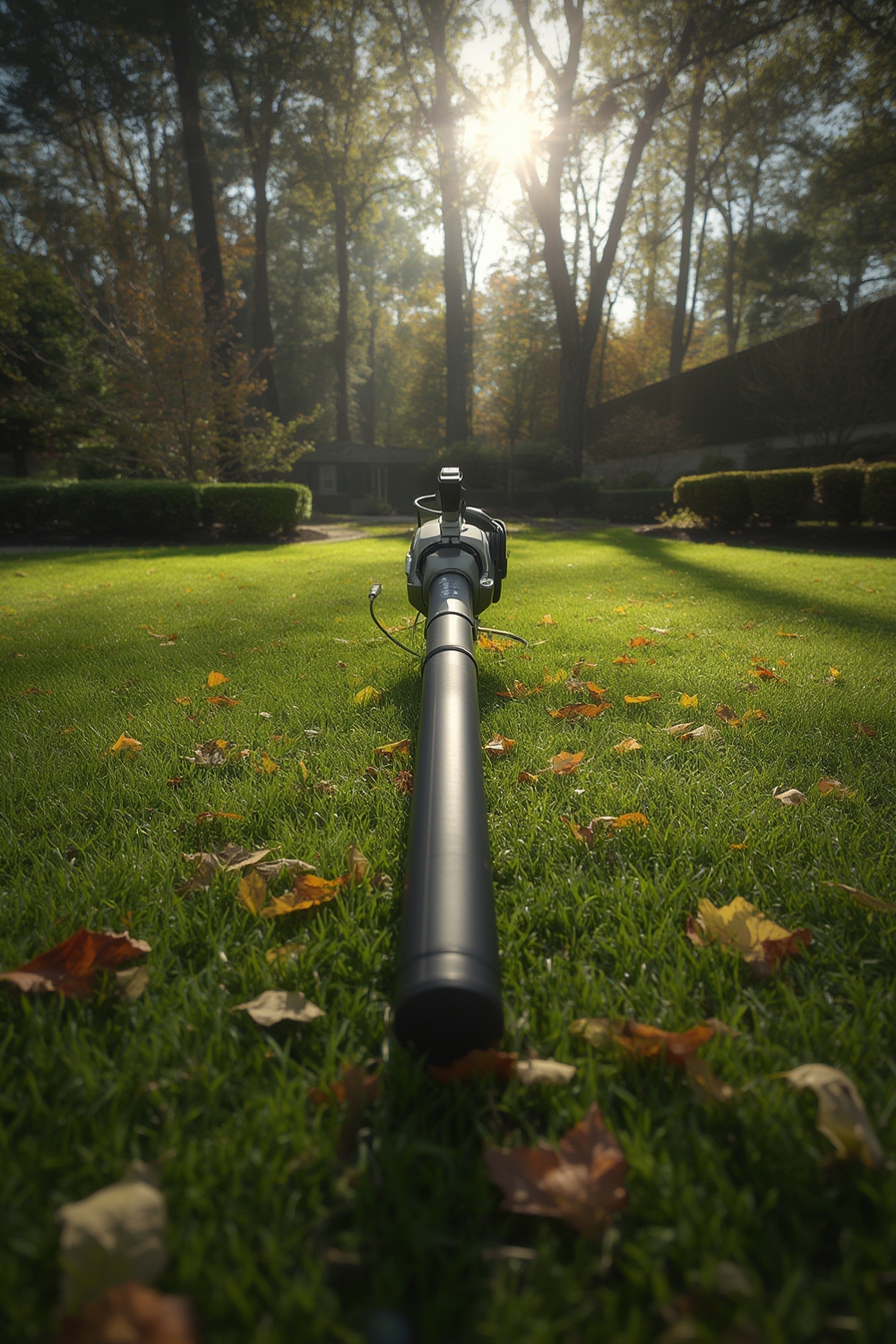
Still, there’s no perfect solution. Battery runtime, airspeed, cost, and the ability to handle tough, wet debris are all critical issues—particularly if you’re used to gas-powered tools that run as long as your fuel holds out.
For people prioritizing sustainable yard care, minimizing noise for neighbors, and eliminating routine engine maintenance, the trade-offs can be worth it. But making a smart choice means looking honestly at the specs, use cases, and what’s missing in typical buying guides.
Want to fully transform your outdoor space after leaf cleanup? Explore our covered outdoor living spaces guide to add function and value, or discover eco-friendly clover lawn alternatives for lower-maintenance landscaping.
Step-by-Step Guide to Choosing and Using a Battery Powered Leaf Blower
Upgrading to a battery powered leaf blower takes a bit more than grabbing the first model on the shelf. Here’s a focused, actionable process to find your best fit—and get the results you want:
- Assess Your Yard and Cleaning Needs.
- Small yards (under 1/4 acre): Any 18V or 20V blower will handle dry leaves and grass clippings. Focus on light weight and good balance.
- Medium yards (up to 1/2 acre): 40V–56V batteries offer more airflow and runtime for denser debris.
- Large/wooded properties: You may need a 60V+ model or a backup battery for serious clearing jobs.
- Prioritize Runtime & Battery Swaps.
- Check estimated runtime per charge (often 10–30 minutes at full power for top models).
- If you have lots of trees or long cleanup periods, consider buying a second battery.
- Compare Air Volume (CFM) and Speed Ratings.
- Look for CFM (cubic feet per minute) at or above 400–600 for most home uses.
- Higher CFM moves more debris, but will drain batteries faster, especially on turbo modes.
- Weight & Comfort:
- Most battery leaf blowers weigh 5-9 pounds with the battery installed.
- Lightweight and balanced models are easier to maneuver around tight beds, furniture, and fences.
- Noise & Neighbors:
- Most cordless blowers run 60-65 decibels (much quieter than gas models at 80-90 dB).
- Still, wear ear protection for extended use or if sensitive to high-frequency noise.
- Evaluate Charging Time.
- Standard chargers take 60-120 minutes. Some fast chargers drop that time by half.
- If time between jobs matters, look for kits that include dual chargers or “rapid charge” systems.
- Maintenance & Total Cost.
- Batteries may need replacement in 3-5 years, and a spare pack costs $80-$200.
- You’ll save on gas, oil, filters, and seasonal tune-ups compared to a gas blower.
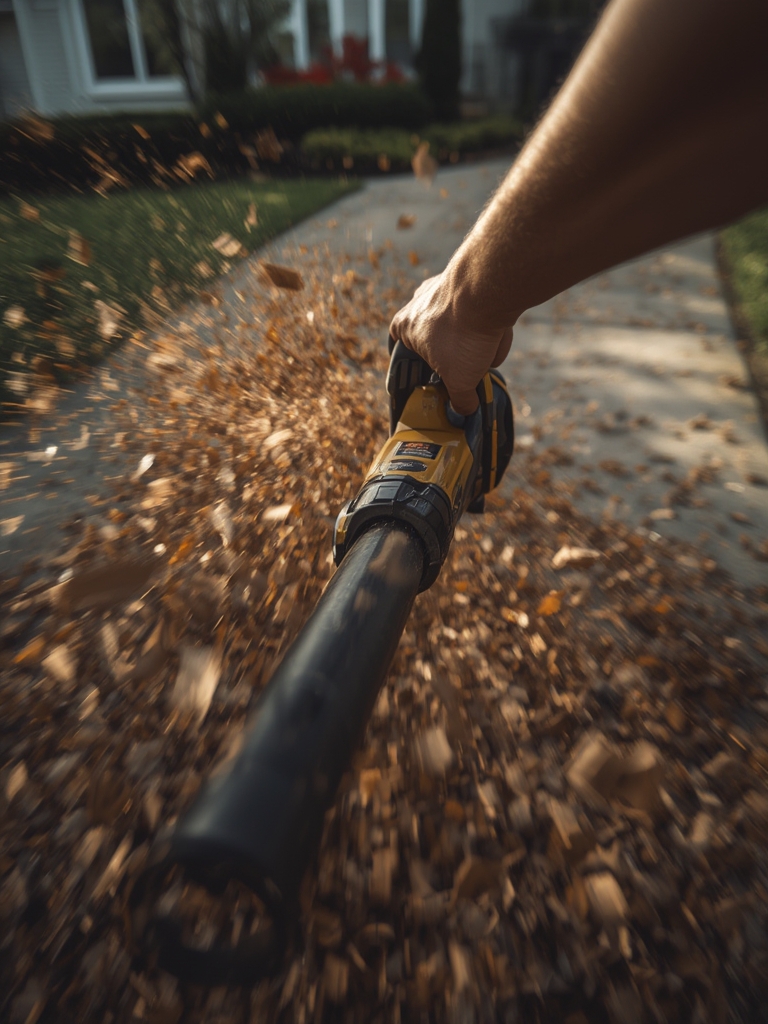
Ready to add to your garden tool lineup? Pair efficient leaf clean-up with tools like a hula hoe or stirrup hoe for a fast, weed-free landscape every season.
Advanced Analysis & Common Pitfalls
Market Trends & Regulatory Drivers
Why are battery powered leaf blowers surging? Stringent regulations, like California’s ban on gas equipment under 25 horsepower and European noise/emission rules, are key drivers. [Source] Cordless options offer zero emissions and cleaner air but can’t yet match the continuous run or raw blowing force of gas models—especially on big or wet jobs.
Comparison Table: Battery vs. Gas Leaf Blowers
| Feature | Battery Powered Leaf Blower | Gas Powered Leaf Blower |
|---|---|---|
| Emissions | Zero emissions, eco-friendly | Produces exhaust and fumes |
| Noise | 60-65 dB (quieter) | 80-90 dB (louder) |
| Runtime | 10–40 minutes (depends on settings and battery) | Will run as long as you refill gas tank |
| Power for Wet Debris | Improving, but can struggle with heavy/wet leaves | Strong performance even with tough debris |
| Maintenance | Minimal: just battery care and periodic cleaning | Regular: spark plugs, fuel, air filter, oil, tune-ups |
| Initial Cost | $120–$400 with battery & charger | $130–$500 depending on size and features |
| Lifetime Cost (5 years) | + $80–$200 per battery every 3-5 years | + $50–$100 annual for gas, oil, tune-ups |
Real-World Problems & Gaps in Buying Advice
- Battery anxiety: Most homeowners are surprised by how fast turbo mode drains batteries. Plan for a second pack if your yard has lots of trees, or your job takes more than 20 minutes.
- Poor wet leaf performance: Even the best battery blowers lose efficiency on soaked, matted leaves. It’s often faster to wait for dry weather or use a rake for heavy patches.
- Charging time is rarely discussed: Expect up to two hours for a full recharge unless you invest in rapid charging accessories.
- Limited advice on small yards and obstacle-heavy spaces: Pick lighter models (under 7 lbs) with narrow nozzles for best maneuverability if you have lots of garden beds or patio furniture.
- Environmental trade-offs: While battery models cut air pollution and noise, battery recycling and disposal practices are still evolving, so check your town’s e-waste options.
If you pursue sustainable options for your outdoor lifestyle, see our in-depth guide to sustainable building materials and learn how to convert spaces for DIY home improvement projects.
Conclusion: Are Battery Powered Leaf Blowers Worth It?
Battery powered leaf blowers offer cleaner, quieter, and more convenient yard cleanup for most homes—especially if you prioritize low maintenance and neighborly quiet. However, limitations with battery runtime, wet debris handling, and charging speed mean you should choose carefully and set realistic expectations.
If you want sustainable, low-hassle tools and can plan cleanups around battery life, a battery powered leaf blower can be one of the best investments for your outdoor toolkit. Ready to make the switch? Research your needs, compare features honestly, and upgrade your yard routine—your lungs, your neighbors, and the planet will thank you.
FAQ
How long does a battery powered leaf blower last per charge?
Most battery powered leaf blowers run 10-30 minutes at full power on a single charge. Runtime depends on battery size, power mode, and how heavy the leaves are. For large yards, it’s smart to have an extra battery ready so you can swap and keep working.
Can cordless leaf blowers handle wet or matted leaves?
Battery powered models do better with dry, loose leaves. Most have trouble moving wet, compacted debris, especially if CFM and power ratings are lower. For heavy wet cleanup, you may still need a rake or consider a higher voltage unit.
How often do I need to replace the battery?
Expect to replace the battery every 3 to 5 years if you use the blower regularly. Temperature swings and deep discharges shorten battery life, so store packs inside and avoid running them fully dead if possible.
Are battery powered leaf blowers really quieter?
Yes, cordless blowers are much quieter than gas models, typically producing about 60-65 decibels—enough to protect your hearing and keep neighbors happy. Always check the model’s noise rating if you live in noise-restricted areas.
What’s the total cost of ownership versus a gas blower?
You’ll pay less for fuel and maintenance with a battery powered leaf blower, but replacement batteries can add up. Over five years, costs are usually similar, with much more convenience and less hassle on the battery model.
